- calendar_today August 10, 2025
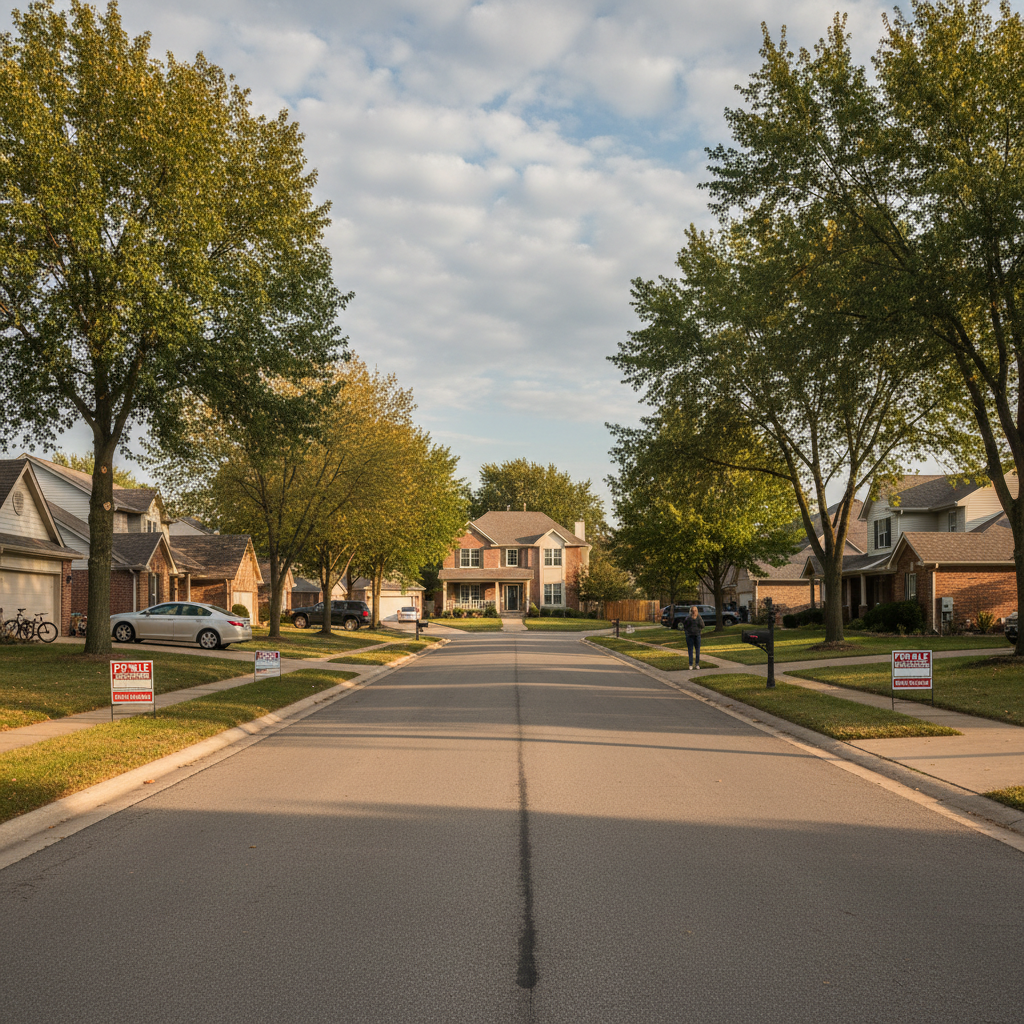
From Minneapolis to St. Louis, and from Des Moines to Detroit, the Midwest housing market is in a deep freeze in 2025. Despite its reputation as one of the most stable and affordable regions in the country, the real estate engine here has stalled. Listings are down. Buyers are sidelined. And sellers? They’re not moving either.
It’s not a crash — but rather a slow, grinding standstill. And it’s affecting nearly every metro and rural market across the 12-state Midwestern region.
Here are six key reasons why the Midwest housing market is stuck — and what it means for buyers, sellers, and investors.
1. Mortgage Rate Lock-In Has Paralyzed Sellers
The number one reason the Midwest housing market is frozen: the mortgage rate “lock-in” effect. In states like Indiana, Michigan, and Iowa, millions of homeowners hold mortgages below 4%, and with rates near 7% in mid-2025, very few are motivated to sell and lose that advantage.
This inertia is translating into historic inventory shortages across cities like Milwaukee, St. Paul, and Kansas City. Even downsizers and retirees are staying put, unwilling to trade lower payments for more expensive new ones.
“If you’re locked into a great rate, it just doesn’t make financial sense to list right now,” said Ali Wolf, Chief Economist at Zonda.
2. Inventory Has All but Vanished
According to Realtor.com, active listings across the Midwest are down 18% year-over-year. Key markets like Columbus, Chicago suburbs, and Omaha are reporting some of their lowest listing volumes in over a decade.
Even rural areas — typically considered more fluid — are seeing a dramatic drop. In parts of Nebraska and the Dakotas, buyers are encountering bidding wars on farmhouses, cabins, and suburban homes with basic features.
This shortage has skewed the balance of power toward the few sellers still active, especially in high-demand metro areas.
3. Affordability Is at a Breaking Point
The Midwest has long been a haven of affordability — but that advantage is shrinking. Thanks to interest rates pushing monthly payments up by 30–40% since 2022, buyers are now priced out even in moderate-income cities like Fort Wayne, Green Bay, and Springfield.
According to the National Association of Realtors, the Housing Affordability Index for the Midwest has dropped below 100 for the first time in 15 years — meaning the typical family can no longer comfortably afford a median-priced home.
“In 2025, even in the Midwest, $300,000 doesn’t go as far as it used to,” said Selma Hepp, Chief Economist at CoreLogic.
4. Builders Are Pulling Back
New housing starts across the Midwest are down nearly 12% year-over-year, according to U.S. Census Bureau data. Builders are scaling back amid volatile material costs, high interest rates, and unpredictable buyer demand.
Even in areas with land availability — like Iowa, Minnesota, and southern Illinois — developers are waiting out market uncertainty. Some are shifting focus from single-family construction to build-to-rent models, especially around university towns and job hubs like Madison, Lincoln, and Grand Rapids.
But rental supply won’t solve the homeownership gap.
5. Prices Remain Sticky — and Still Rising
Despite the slowdown, prices haven’t dropped significantly. According to Zillow, Midwest home values are still inching up — with a 2.4% regional increase in the first half of 2025. Markets like Indianapolis, suburban Chicago, and suburban St. Louis are still seeing modest gains due to extreme supply shortages.
This stickiness in pricing, even amid weakening demand, is adding to buyer frustration. Many are waiting for prices to correct — but that correction hasn’t come yet.
“We’re in this weird limbo where prices aren’t dropping because there’s nothing to buy,” said Logan Mohtashami, housing analyst at HousingWire.
6. First-Time Buyers Are Struggling to Break In
Young buyers in the Midwest are facing stiff headwinds:
- Limited starter-home inventory
- Down payment hurdles
- High monthly costs due to interest rates
In cities like Detroit, Cleveland, and St. Louis — where first-time buyers had once found opportunity — affordability gaps have widened. Investors are also scooping up many lower-priced listings, reducing access even further.
According to Redfin, only 26% of Midwest home purchases in 2025 were made by first-time buyers — down from 34% in 2019.
“This is not just a pause — it’s a squeeze-out,” said Richard Green, Director of the USC Lusk Center for Real Estate.
A Frozen Market — But Not a Broken One
It’s important to note: the Midwest isn’t experiencing a housing crisis — but a housing freeze. High rates, low supply, and pricing pressures are combining to make real estate nearly inaccessible for many. But the fundamentals remain stable:
- Foreclosures are low
- Homeowners have equity
- Demand is delayed, not destroyed
Once interest rates begin to drop and inventory slowly rebuilds, experts predict a gradual thawing. But until then, the Midwest market will remain tight, slow, and unforgiving to unprepared buyers.
What Can Buyers Do in 2025?
Navigating this environment requires creativity and patience. Experts suggest:
- Consider up-and-coming markets like Peoria, Fargo, or Terre Haute
- Partner with local lenders who offer special state-based incentives
- Explore FHA, USDA, or shared equity programs
- Keep finances flexible and avoid maxing out preapprovals
The Midwest’s housing market may be frozen — but for strategic buyers, opportunity still exists beneath the surface.