- calendar_today August 13, 2025
As 2025 unfolds, the Midwest’s commercial real estate (CRE) sector is experiencing a halting and uneven recovery. While the broader U.S. economy shows signs of stabilization, the Midwest’s property markets remain under strain—particularly in urban office cores and traditional retail corridors. Industrial assets, once the region’s outperformers, are also starting to feel the impact of overbuilding and softening demand.
From Chicago to Indianapolis, St. Louis to Minneapolis, and across cities in Ohio and Iowa, Midwestern CRE continues to wrestle with post-pandemic shifts in workplace behavior, consumer preferences, financing conditions, and government policy. Below are seven factors stalling the region’s rebound—and what stakeholders should monitor heading into the second half of 2025.
1. Office Vacancies Remain High Across Metro Cores
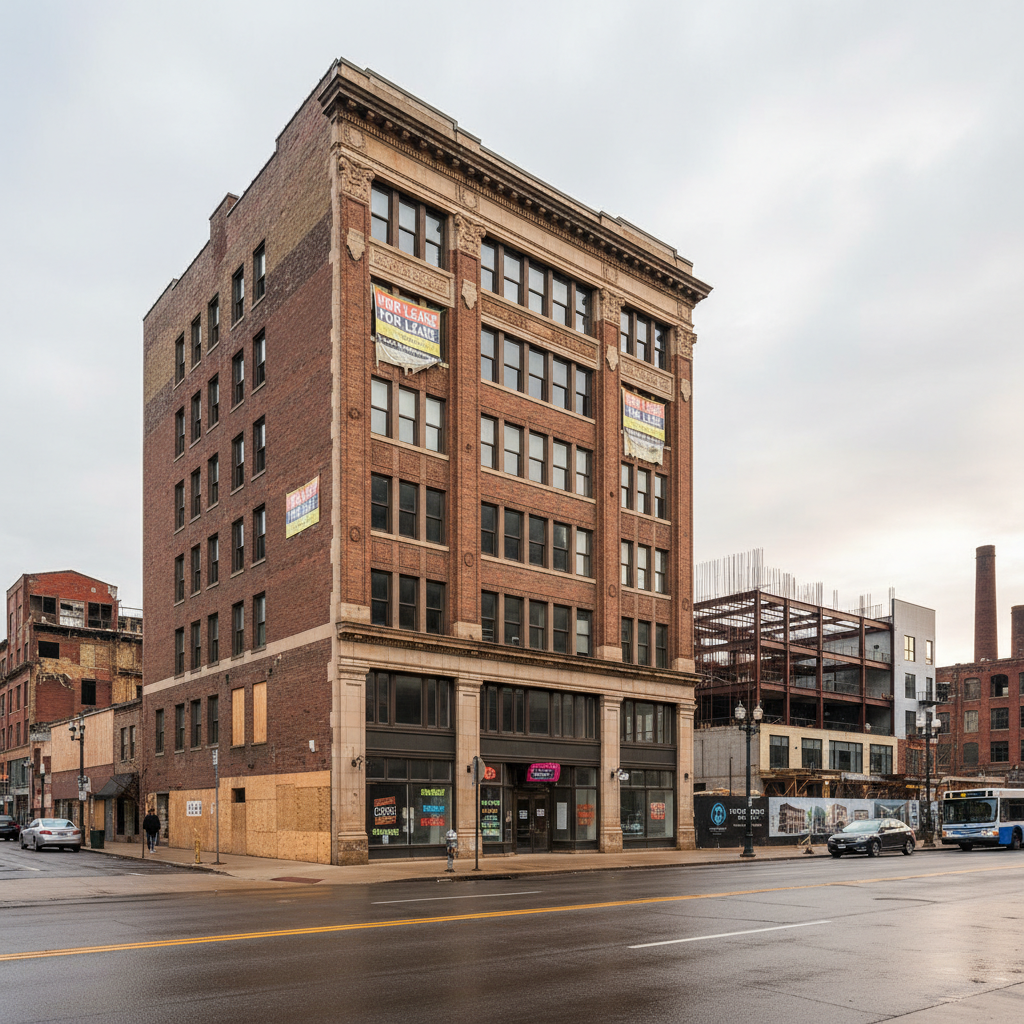
Office markets in the Midwest have been hit hard by structural changes to how companies use space. In Chicago, Minneapolis, and Cleveland, vacancy rates have surpassed 20%, according to CBRE’s Q2 2025 Office Report. Even cities with historically tight markets—like Des Moines and Columbus—have seen significant increases in sublease space.
The shift to hybrid work is entrenched, and companies are taking a cautious approach to long-term leases. As a result, landlords are offering heavy concessions, and buildings without modern layouts or amenities are seeing significantly lower absorption.
“In many Midwestern cities, the flight-to-quality trend is real. Older buildings are becoming obsolete unless they are repositioned,” said Julie Whelan, Head of Occupier Research at CBRE.
2. Retail Real Estate Faces Ongoing Behavioral Shifts
The retail landscape across the Midwest continues to reflect the lingering effects of e-commerce expansion and evolving consumer preferences. Regional malls in cities like St. Louis, Milwaukee, and Kansas City are still struggling, with foot traffic in Q2 2025 down by over 20% from 2019, according to Placer.ai.
While open-air centers and suburban strip malls are showing some strength—especially those anchored by grocery or healthcare tenants—many legacy retail assets are ripe for redevelopment. Adaptive reuse is gaining traction, with former mall sites in Ohio and Michigan being converted into mixed-use districts, senior living, or medical campuses.
3. Industrial Sector Growth Slows After Pandemic Boom
The Midwest was a top beneficiary of the e-commerce surge during the pandemic, thanks to its central location and expansive logistics infrastructure. But in 2025, the region’s industrial sector is showing signs of cooling.
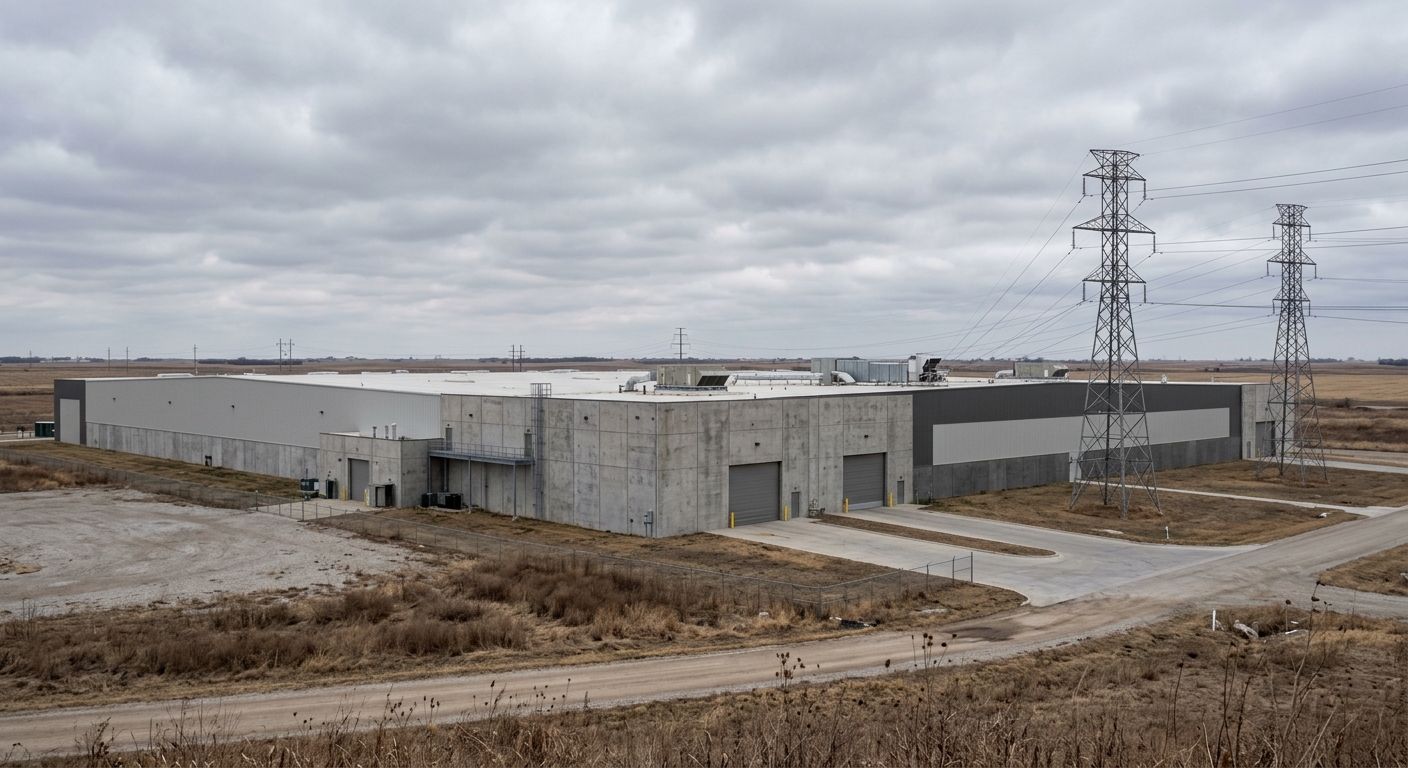
Cushman & Wakefield reports industrial vacancy rates in the Midwest increased to 6.4% in Q2 2025—up from 4.8% a year ago. This rise is driven by a glut of new supply in markets like Indianapolis, Joliet, and Columbus, where warehouse construction peaked in 2023.
Higher transportation costs and normalizing consumer demand are also contributing to the slowdown. Still, long-term fundamentals remain strong in well-located logistics hubs near rail and highway interchanges.
4. Multifamily Development Slows Amid Financing Pressures
Multifamily remains one of the most resilient segments across the Midwest, but momentum is slowing in 2025. Developers are facing higher interest rates, labor shortages, and construction delays. U.S. Census Bureau data shows that multifamily permitting in Midwestern states dropped by 13.1% year-over-year in May 2025.
Cities like Minneapolis, Cincinnati, and Grand Rapids continue to see steady rental demand, but developers are scaling back expectations. Zillow’s June 2025 index indicates regional rent growth of just 1.5%, down sharply from 4.9% in 2023.
Build-to-rent communities and workforce housing models are gaining traction in smaller metros and suburban areas, where land is cheaper and regulatory processes are more predictable.
5. Investment Activity Hits a Multi-Year Low
CRE investment across the Midwest has contracted sharply. According to MSCI Real Assets, total transaction volume across the region was $27.6 billion in H1 2025, down 30% from the same period in 2024.
High borrowing costs, lender caution, and valuation uncertainty are the primary drivers. Office and retail properties are seeing limited buyer interest unless significantly discounted. Meanwhile, investors are increasingly targeting distressed or transitional assets, particularly in high-growth metros like Indianapolis and Columbus.
“Many investors are waiting on the sidelines until there’s a clearer pricing reset,” said Jim Costello, Chief Economist at MSCI.
6. Policy and Tax Changes Create Localized Uncertainty
Policy trends vary widely across the Midwest, adding to market complexity. In Illinois, potential commercial tax reassessments have spooked some investors. In Minnesota and Wisconsin, zoning reform efforts are aimed at encouraging mixed-use development and office conversions—but implementation has been inconsistent.
Several Midwestern states, including Indiana and Missouri, are also reviewing incentives tied to opportunity zones, historic tax credits, and infrastructure spending. However, delays and administrative hurdles are limiting uptake in many areas.
7. Investor Confidence Remains Fragile
Confidence in Midwestern CRE is still tepid. REIT performance tied to office and retail exposure in the region lags national averages, according to Nareit. Institutional capital has pulled back, particularly from secondary and tertiary markets where liquidity concerns persist.
At industry conferences such as ICSC Midwest and the Urban Land Institute’s Heartland Summit, discussion continues to center on ESG integration, adaptive reuse, and digital modernization. But many property owners are struggling to implement these initiatives amid budget constraints and uncertain ROI.
What to Watch in the Second Half of 2025
Despite challenges, several developments could support a regional turnaround:
- The Federal Reserve’s rate pause may gradually ease capital constraints.
- Distressed asset sales are expected to increase, especially in struggling office and retail markets.
- Federal and state-level incentives for housing and adaptive reuse could stimulate new development—especially in cities like Columbus, Detroit, and Milwaukee.
Still, recovery will remain uneven. Urban office buildings and legacy retail centers will likely lag behind, while suburban industrial and multifamily assets may rebound faster in logistics-adjacent corridors and high-growth counties.
Final Takeaway
The Midwest’s commercial real estate recovery in 2025 is marked by divergence—across sectors, cities, and investor appetite. While the region benefits from affordability, infrastructure, and strategic location, structural headwinds remain. A data-driven, flexible approach focused on repositioning, reinvestment, and regional collaboration will be key to navigating the next phase of the recovery.