- calendar_today August 18, 2025
Economic Regions Gear Up for Slower Growth and Adjust to New Federal Reserve Projection
Introduction
The new projection by the Atlanta Federal Reserve that there will be a single rate cut in 2025 has radically changed economic projections across the Midwest. In the backdrop of the fresh outlook, corporate houses, investors, and policymakers are recalculating their strategies as the economic recovery’s pace appears slower than initially thought. While the action reflects the Fed’s conservative approach to contain inflation, it also poses fresh challenges to heavily funding- and investing-dependent companies. The policy change provokes questions over potential expansion and economic stability within the region.
Atlanta Fed’s New Projection and What It Means
The most recent revision by the Federal Reserve of its economic outlook indicates a less aggressive rate of interest rate reduction than previously anticipated. After a period of aggressive rate hikes to contain inflationary pressures, the Fed now sees only a moderate rate cut in 2025. This revision is due to inflationary fears as well as the need to ensure long-term economic well-being.
Effect on the Manufacturing Industry
Manufacturing is a key economic pillar in the Midwest and one of the largest drivers of employment and local GDP. The estimated slower pace of interest rate reductions is, however, a detraction to manufacturers to access finance for expansion and growth.
- Increased Cost of Borrowing to Facilitate Growth: A majority of manufacturing businesses rely on credits and lines for funding new projects, equipment placements, and expansion of the factories. Where future increases in interest rates will happen, financing investments will cost more, and perhaps, perhaps, projects can be delayed or reduced in plans of growth.
- Lower Capital Investment: The small producers are most likely to struggle in obtaining low-cost finance, and this may hold back growth and innovation. This would lead to declining productivity and reduced competitiveness, especially as better low-cost borrowing by foreign rivals could impart to them a comparative advantage.
- Effect on Labor Demand: Decaying investment and growth can also result in reduced employment opportunities created in the manufacturing sector. This may especially affect those communities where there is highest dependence on manufacturing for jobs, even causing elevated levels of unemployment in certain districts.
Agricultural Sector Grapples with Uncertainty
Another of the Midwest economy’s key sectors is agriculture, where the region is famous for its large-scale crop production and animal husbandry. However, the new Federal Reserve estimate could be intimidating for farmers and agribusiness firms that depend on loans to purchase equipment, seeds, and inputs.
- Increased Costs of Financing to Farmers: Short-term financing is required by farmers to finance operations, particularly planting and harvesting cycles. As borrowing will remain costly, farmers would avoid borrowing, which may curtail their ability to grow or improve operations.
- Higher Commodity Prices and Price Inflation: Besides borrowing, the agricultural industry may be squeezed by higher commodity prices, consequently increasing the costs of production.
- Long-Term Economic Stability: If the Federal Reserve scheme to hold inflation in check works, the farm economy can likely have more stability in the long term.
Energy and Natural Resources Affected by Rate Actions
The Atlanta Fed’s new projection is also affecting the Midwest energy sector, as far as oil, natural gas, and alternative energy are concerned. Although the energy market has been volatile, the cost of financing high-ticket infrastructure projects in this market is inherently tied to interest rates.
- Slower Financing of Energy Projects: Most energy firms employ bonds and loans to fund high-cost infrastructure projects such as drilling programs, pipeline installations, and renewable energy projects.
- Potential Delays in Green Energy Projects: The transition to renewable energy in the Midwest, including solar, wind, and bioenergy, could be falling behind schedule if corporations are finding it hard to access funds at affordable rates.
- Impact on Energy Prices: Higher cost of borrowing will serve to push up energy prices, particularly electricity and natural gas. Both individuals and businesses will be forced to shell out more money, influencing cost of living as well as business expenses.
Real Estate and Construction Sector at Risk
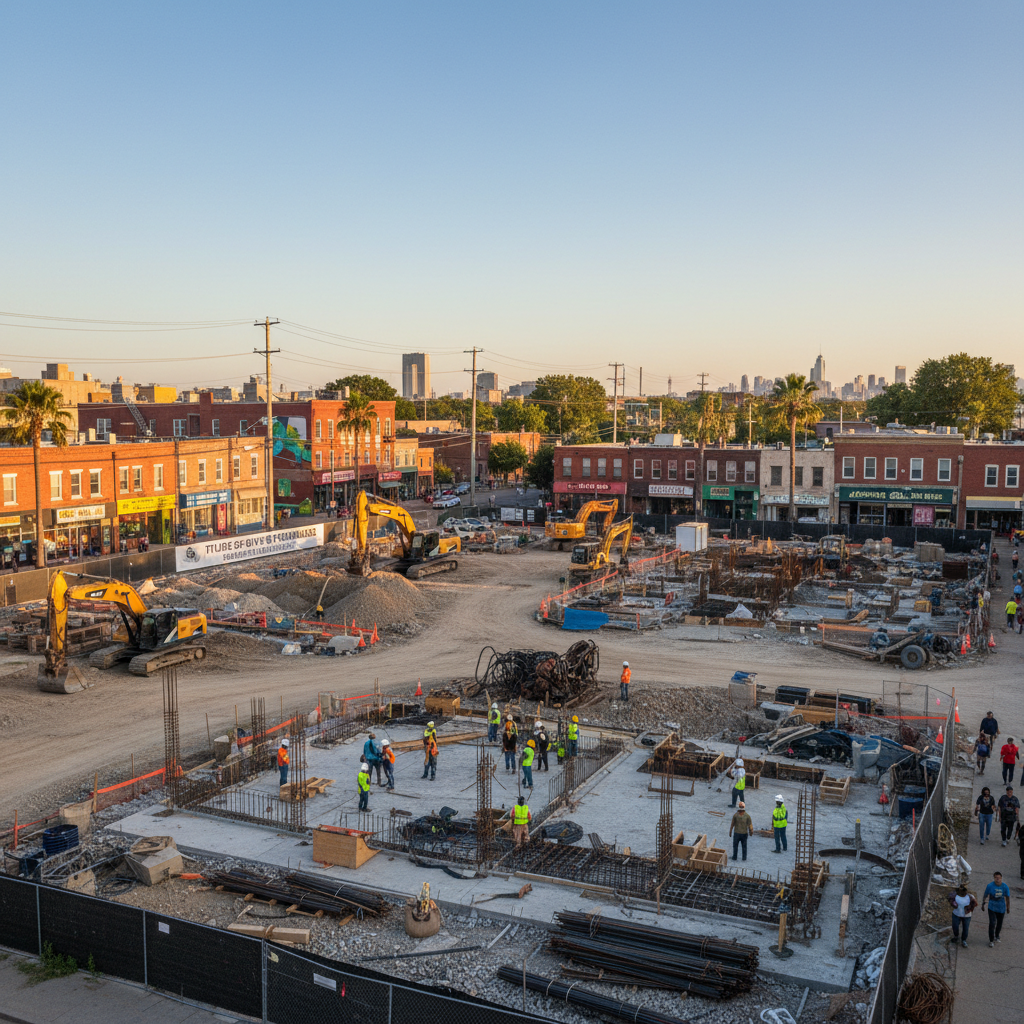
Real estate and construction firms, whose business had witnessed peak demand in the recent past, are now struggling with the Atlanta Fed’s prediction of constant high interest rates. The mortgage rates have already gone up with Fed policies, and the revised estimate foresees that the same won’t dip much in the near future.
- Slower Home Market Activity: Higher-cost mortgage rates will discourage home buying demand, particularly from first-time buyers. Buyers will wait to purchase homes as long as borrowing is costly, and therefore the home market will grow more slowly with even falling home prices in some markets.
- Commercial Property Issues: Even the commercial property market is impacted, as business expansion or new-build schemes initiated by companies will put on the backburner those with higher financing costs. This would provide a chill to the construction of new office blocks, shopping centers, and factories.
- Increased Construction Outlays: To developers, the cost of financing opportunities for development can lead to more total project costs. This may involve less new projects and potential delay in new projects in ongoing ventures, particularly to developers reliant significantly on finance in funding construction outlays.
Consumer Spending and Retail Sector Adapations
The Midwestern retail sector itself will also feel the pinch of higher interest rates. With lending rates still high, consumer confidence will be eroded and spending on big-ticket items will weaken.
- Conservative Consumer Behavior: Consumers will tend to rein in discretionary spending, particularly on items like cars, home appliances, and high-end valuables. Region’s retailers can be hit into altering their strategy to align with more conservative consumption habits.
- E-Commerce Growth: Although conventional brick-and-mortar retail shops might witness slowed growth, e-commerce could still grow as consumers shift their spending onto the internet. Yet, the e-commerce sector will also be plagued by issues of logistics and fulfillment expenses since lending rates will remain high.
Conclusion
The Atlanta Fed’s revised economic forecast of only one rate cut in 2025 will have a far-reaching effect on the Midwest economy. From production to agriculture, energy, and property, customers and companies in the region will be forced to adjust to a lower rate of economic growth. As much as the Fed’s conservative policy can permit inflation to settle down, the higher cost of borrowing and reduced rates of investment could cause downright enormous problems for most sectors. How the Midwest reacts to all this will make a difference to its economic trend in the coming years.