- calendar_today August 24, 2025
.
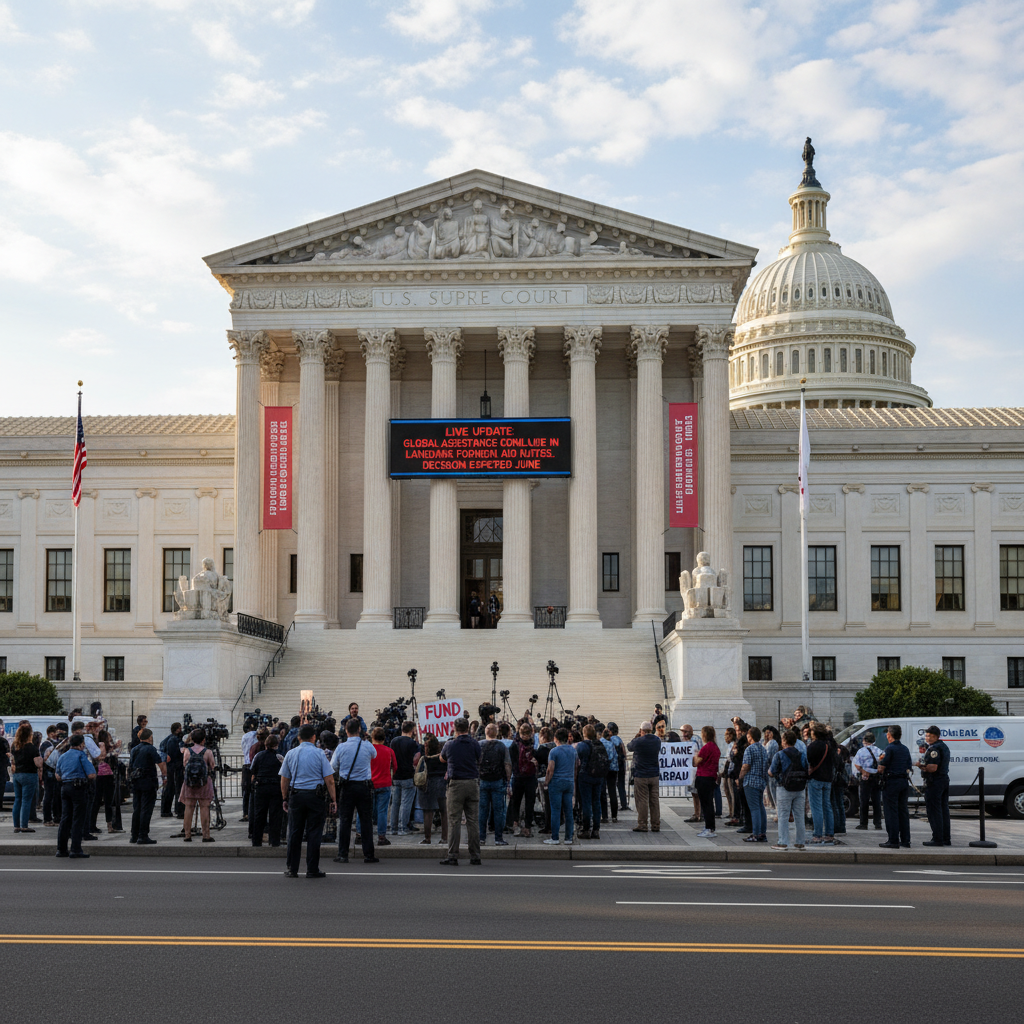
Attorneys for the Trump administration asked the Supreme Court late Tuesday to let it block billions in foreign aid spending Congress had previously signed off on. The filing asks the justices to take up the matter and send it back down to the D.C. Circuit for further consideration — the second time in six months that the case will go back to the nation’s high court.
The legal fight is over nearly $12 billion in aid set aside for the U.S. Agency for International Development (USAID) in last year’s budget. That money is supposed to be spent before the fiscal year ends on September 30. Trump was quick to act on the issue as soon as he returned to office in January. The president signed an executive order on his first day back, directing the federal government to cease nearly all foreign aid spending. Trump framed the order as part of a larger effort to end “waste, fraud, and abuse” when it comes to spending on foreign programs.
In the months since, that executive order has been blocked in court. In February, U.S. District Judge Amir Ali in Washington, D.C., ruled that the White House was required to release the money for projects that had already been approved by Congress. Ali’s decision forces the Trump administration to continue payments on billions of dollars in USAID grants.
Appeals Court Order Blocks Payments
The Trump administration has appealed the decision. In a move earlier this month, the U.S. Court of Appeals for the D.C. Circuit took up the case for the second time, this time vacating Judge Ali’s injunction. Judge Karen L. Henderson, a Bush I appointee, wrote the majority decision, saying that the plaintiffs — foreign aid groups that are seeking to restore their grant payments — do not have sufficient legal cause to sue the administration in the first place.
Henderson wrote that the groups had no “cause of action” under the so-called doctrine of impoundment. The appeals court has not formally issued a mandate in favor of the Trump administration in this case, however. That delay has allowed Judge Ali’s order — and the payment schedule he put in place — to remain in place in the interim. As a result, the administration has been rushing to take measures to block the disbursal of the full $12 billion in foreign aid before the fiscal year deadline at the end of September.
Arguments on Both Sides
Attorney General D. John Sauer, who filed the emergency request with the Supreme Court, argued on Tuesday that unless the justices agree to the case, the Trump administration will be forced to “rapidly obligate” nearly $12 billion in foreign aid funds before the September 30 deadline. Sauer also argued that the issue is not a proper matter for the courts and that if anything, it should be resolved by the political branches of the government.
“Congress did not upset the delicate interbranch balance by allowing for unlimited, unconstrained private suits,” wrote Sauer in his filing. “Any lingering dispute about the proper disposition of funds that the President seeks to rescind shortly before they expire should be left to the political branches, not effectively prejudged by the district court.”
The plaintiffs in this case, which are foreign aid groups that receive USAID funds for a variety of projects, say otherwise. They are arguing that the president does not have the power to unilaterally block funding that has already been appropriated by Congress. The groups point to the Impoundment Control Act (ICA), which was passed in the 1970s and aimed at reining in executive branch overreach over the federal budget. The plaintiffs are also pointing to the Administrative Procedure Act as a basis for their claims.
Decision Likely to Address the Authority of Trump
The case is one of the biggest questions the Supreme Court may tackle this session. The case, set to be reviewed by the high court on an emergency basis, is likely to address the Trump administration’s authority to withhold funds from the budget it has signed off on. This year’s split 5-4 decision earlier this year has put the matter in limbo, however.
For President Donald Trump, the issue is a major one and a part of his campaign to cut foreign aid spending and give more budgetary power to the executive branch. The foreign aid groups that are suing the administration face a very real budgetary deadline for their projects and need to know as soon as possible if the funds will be coming in. In the meantime, the $12 billion in foreign aid sits in limbo as September 30 approaches.