- calendar_today August 27, 2025
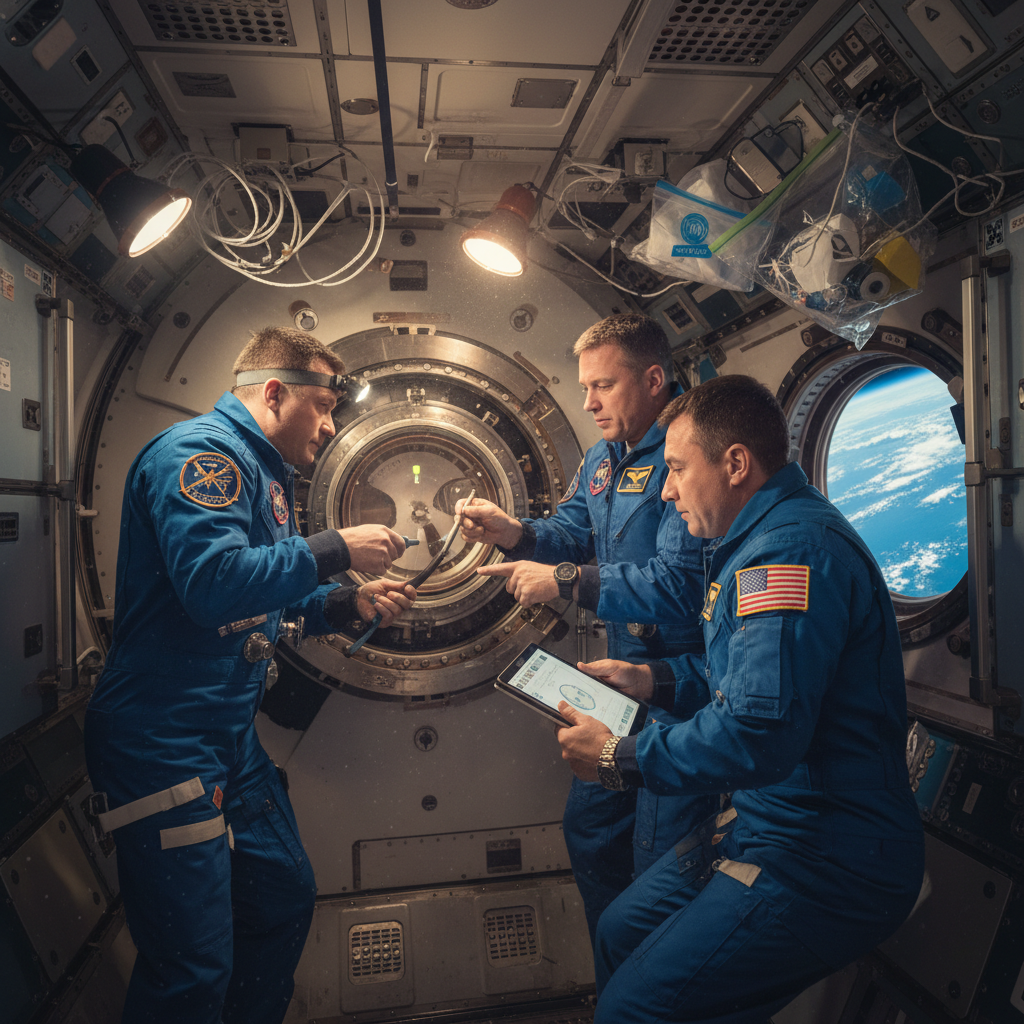
The International Space Station has developed another air leak that will postpone an upcoming manned mission. NASA officially announced the delay of Axiom Mission 4 which involved transporting four astronauts to the space station through a commercial spaceflight. NASA continues to withhold details beyond basic information.
The seriousness of the situation is evident behind the scenes. Various sources have revealed to Ars Technica that NASA is handling the situation with gravity by inspecting structural vulnerabilities in a space station that has operated for almost 30 years.
The International Space Station has experienced air leaks before this incident. A gradual but continuous decline in pressure since 2019 has been identified at the Russian Zvezda service module. The primary issue exists at the PrK section which serves as a transfer tunnel connecting the module to the docking ports utilized by Soyuz and Progress spacecraft.
Russian cosmonauts performed various temporary fixes throughout the years which included filling cracks and experimenting with new sealants. The temporary solutions reduced air loss to a manageable rate of approximately two pounds daily. The most effective long-term strategy? The best long-term solution involved keeping the PrK hatch shut whenever it wasn’t necessary to use it.
That approach worked—until recently.
Roscosmos confirmed this month that the PrK module reached a state of complete sealing. NASA confirmed the effectiveness of recent repairs after declaring that the leak rate inside the PrK had ceased.
That sounds like progress. But then a new problem emerged: The total air pressure on the ISS continued to decrease.
Sources familiar with the situation suggest the hatch seals are the probable cause. The hypothesis suggests station air escapes through the hatch into the PrK module which maintains consistent pressure creating the false impression of module integrity while the entire station suffers air loss.
This has left engineers scratching their heads. The module shows no leaks and repairs remain intact but there remains an unresolved issue.
The present air loss situation is not immediately hazardous but suggests serious concerns regarding the ISS’s future structural stability. High cycle fatigue represents one of the most severe problems where metals like aluminum undergo long-term degradation through repeated stress.
Picture repeatedly bending a wire until it snaps. The first time, it bends. After a few times, it breaks. Metal fatigue is a phenomenon that leads to sudden failures without any prior indication.
Since its segmented launch in 1998 the ISS has remained in orbit for nearly thirty years. Since its launch, the ISS has endured 30 years of harsh thermal variations and extreme pressure shifts combined with structural stress.
NASA risk evaluations assign structural cracking the top position on their 5×5 risk matrix. In simple terms: Structural cracking represents one of NASA’s primary concerns according to their risk assessments.
It’s not just theory either. Hidden fuselage cracks caused a sudden decompression event in Aloha Airlines Flight 243 during its 1988 mid-flight journey which resulted in a tragic demonstration of metal fatigue. The plane held together—barely.
NASA postponed the scheduled Thursday launch of the Axiom-4 mission due to existing uncertainties.
The agency announced that Axiom Mission 4’s delay will give NASA and Roscosmos extra time to evaluate current conditions and determine whether further troubleshooting measures are necessary.
The mission’s tentative new launch date remains June 18th although it depends on certain conditions. The launch date may face further delays if engineers cannot fix the leak or if it becomes worse.
Both engineers and leadership teams maintain active assessments of the current situation behind the scenes. According to someone who knows about internal talks, the NASA team expressed concern.
NASA remains silent about the leak as questions continue to mount from journalists and observers without yet holding a press conference or issuing a detailed explanation. The only public statement to date?
The station crew maintains standard operations while remaining safe aboard the International Space Station.
And for now, that’s true. The astronauts are safe, and operations continue. The ISS continues to age with fatigue indicators becoming more apparent so the looming question remains.
The response time and clarity of action from involved agencies together with metal strength determine the answer.