- calendar_today August 7, 2025
Why Board Game Makers Are Panicking Over New Tariffs
It’s an industry that’s relatively young and creative, with tight-knit communities and small margins. But now, the board game industry is reeling from an economic shock that may have major long-term consequences. This week, Jamey Stegmaier, the designer behind such hits as Scythe and Wingspan, voiced his concern on social media after an expected announcement: the U.S. will begin applying a 54 percent tariff on goods made in China and imported to the U.S.
In a heartfelt blog post, Stegmaier laid out the personal impact. “Last night I tried to work on a new game I’m brainstorming,” he wrote, “but it’s tough to create something for the future when that future looks so grim. I mostly just found myself staring blankly at the enormity of the newly announced 54 percent tariff.”
For someone who has designed some of the most popular games of all time, it was an unusually open and vulnerable statement, one that has deeply resonated throughout the industry.
Production on a Global Scale, Interrupted
America has an outsized market for tabletop games. The U.S. has by far the largest community, and it’s still growing: Tired of work-from-home meetings and stuck at home without much to do, many have started buying and playing tabletop games during the pandemic.
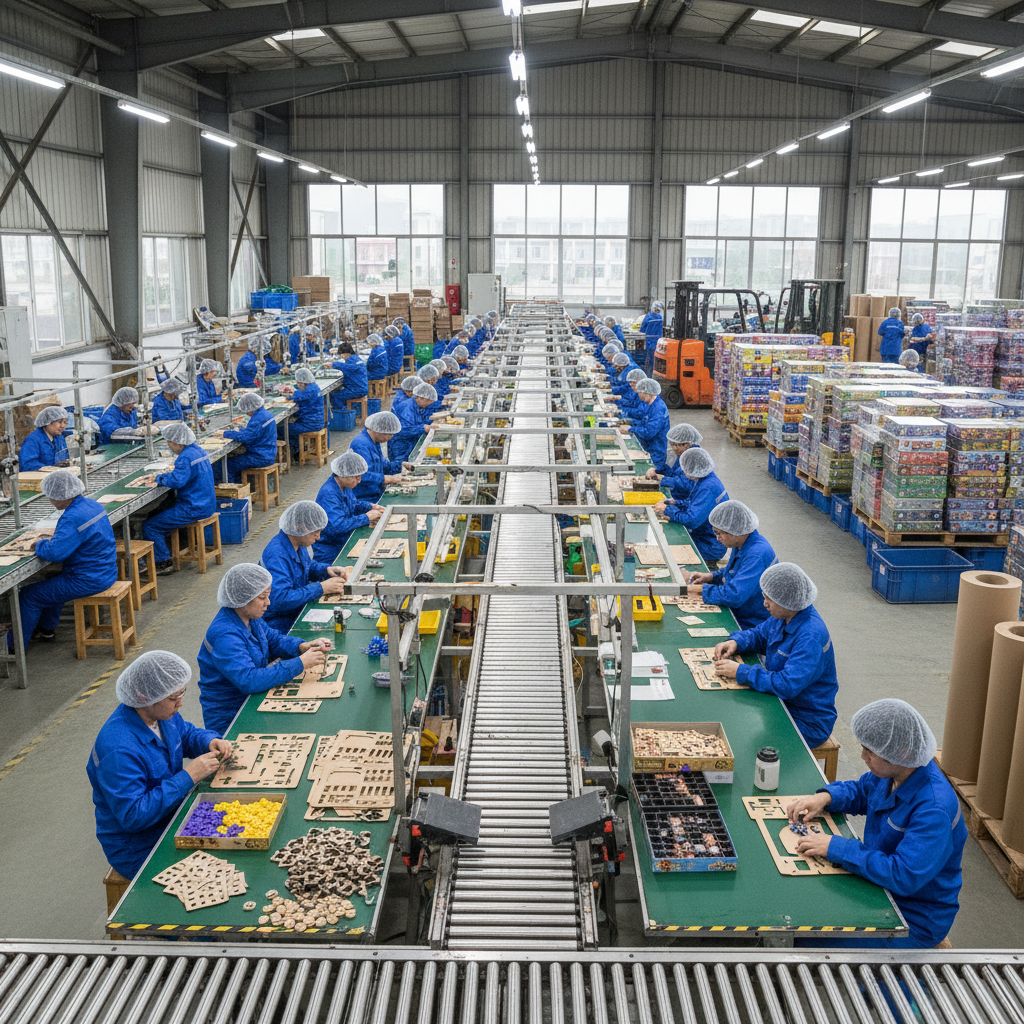
In order to make those games, the U.S. relies on China. China has board game production facilities in most major cities, in fact, but it’s a rare other country where all the pieces of the production puzzle fit together so easily. That means not just printed cards, but custom plastic miniatures, wood tokens, die-cut boards, and specialty dice.
Producing those things at home is theoretically possible, but in practice, the numbers make it untenable. Stegmaier himself notes that the lowest quote he ever received from a domestic manufacturer was $10. For that price, he notes, he could pay to have an entire game produced and packaged in China. And that’s before we even consider the man-hours and logistics required for domestic manufacturing.
Because the costs are so much higher at home, the new tariff is nothing less than an earthquake in the industry. The vast majority of American board game publishers, many of them small to medium-sized companies, are not doing high volumes or making obscene profit margins. When your bottom line suddenly takes a 54 percent hit overnight, with no time to adjust, you start to sweat.
Industry Insiders Weigh In
Stegmaier is far from the only one to speak up. Meredith Placko, the CEO of Steve Jackson Games, the company behind Munchkin, is among many who have echoed his concerns, as her business model is quite similar to most of the industry’s.
“Some people ask, ‘Why not manufacture in the US?’ I wish we could,” Placko writes. “But the infrastructure to support full-scale boardgame production—specialty dice making, die-cutting, custom plastic and wood components—doesn’t meaningfully exist here yet. I’ve gotten quotes. I’ve talked to factories. Even when the willingness is there, the equipment, labor, and timelines simply aren’t.”
It’s more than a logistical concern for Placko; it’s a foundational one. “This is not just a policy change,” she wrote. “It is a seismic shift.”
Rob Daviau, co-founder of Restoration Games and designer of the breakout hit Pandemic Legacy, has also made public comments in the lead-up to this moment. He has been highly critical for months on social media, with nearly every business meeting of late described as “an existential crisis about our industry.” In a recent interview with BoardGameWire, Daviau himself went so far as to predict a “great collapse in the hobby gaming market in the US if/when tariffs like this are implemented.”
Price Tags and Retailers at Risk
Gamers aren’t the only ones who will have to pay for this, of course. Consumers will either have to expect higher prices for new games, or accept reduced quality from companies trying to make up the difference, or see fewer new releases as companies try to weather the storm. Games that sell in the 70 to 80 dollar retail range in the US, for example, are likely to see a 50% jump in cost for no increase in quality.
Retail is another major piece of the puzzle. There has already been much distress in the industry in recent years as online channels eat into brick-and-mortar sales. With gamers having even less disposable income and therefore less likely to buy new, many will simply play more from their existing collection (many of which have games in their “shelves of shame” purchased for pre-launch buzz but never touched), or purchase online, putting further stress on local game stores.
“Within a few months, US companies will lose a lot of money and/or go out of business,” Stegmaier writes. “And US citizens will suffer from extreme inflation.”
Workarounds, Hope Frustrated
There are some options that publishers are exploring in the meantime. It is possible to ship games via a non-U.S. distributor, for example, and European markets have been less affected than others so far. But for an American company selling nearly 65 percent of its goods in the U.S., that’s only a partial workaround, as Stegmaier himself notes. The financial hit is real, and it’s big.
But more than that, it’s maddening, because it’s such a race against time. For games that haven’t yet been fully designed or started production, there’s time to shift priorities and rejigger the budget to account for the higher production cost. But for the game currently on the production line, with all components already purchased and paid for, and the boxes already produced and packed in China, there’s nothing to do but pay the tariff.
Chris Solis, who heads up Solis Game Studio, a small California-based studio, put it. “I have 8,000 games leaving a factory in China this week,” Solis tells The Verge. “I now need to scramble to cover the import bill.”
Industry Advocates Fighting Back
The Game Manufacturers Association (GAMA), an advocacy organization for board game publishers, has been working hard on lobbying against the tariffs and restrictions in the last few months. And while they’ve been engaged and active, so far their efforts have been for naught.
What happens next? For now, the dust is still settling. But the board game industry is facing a major challenge for the first time in its modern history. An industry made by a group of people that fundamentally want to make people happy, and that creates fun and joy for so many, is having its future made precarious.