- calendar_today August 11, 2025
Green Energy Stocks: A Market in Transition
Major green energy stocks have seen a turbulent start to 2025. Tesla (TSLA) has dropped more than 45% year-to-date following its weakest quarterly deliveries in two years. First Solar (FSLR) is down 31.7%, despite reporting $4.2 billion in 2024 sales. Enphase Energy (ENPH) and NextEra Energy (NEE) have also declined, by 29% and nearly 10% respectively.
Midwest investors—particularly those in states like Illinois, Iowa, Michigan, and Ohio—are feeling the ripple effects through regional utility holdings, ESG-focused portfolios, and pension fund exposures. Many are now reassessing whether the downturn presents a discounted entry point or a sign of deeper instability.
Federal Support and Midwest-Specific Initiatives
The federal Inflation Reduction Act (IRA) continues to drive investment in clean energy through 2025, extending key incentives like the 30% Investment Tax Credit (ITC) and the Production Tax Credit (PTC) for renewable generation.
Across the Midwest, federal dollars have accelerated solar and wind deployments:
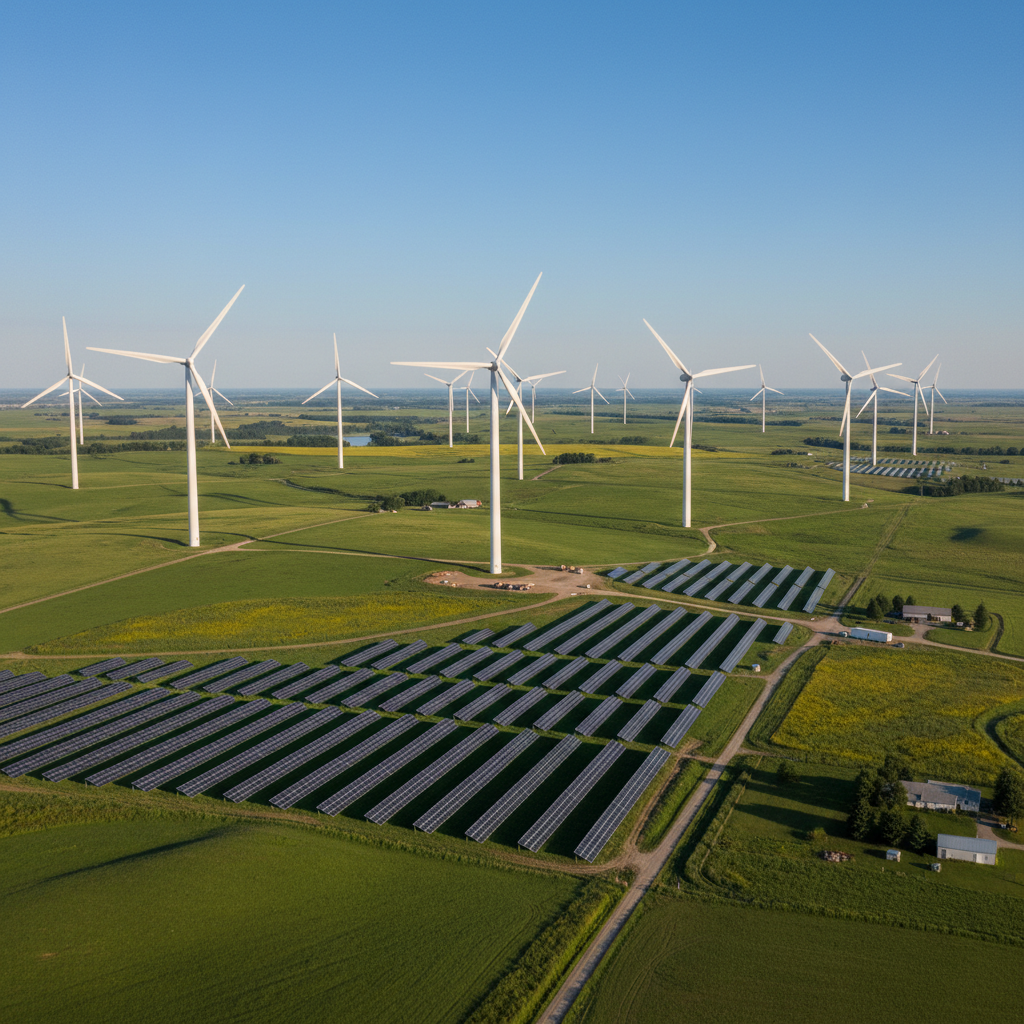
- Iowa and Kansas remain national leaders in wind power generation, with wind accounting for over 50% of electricity production in Iowa alone.
- Illinois is implementing its Climate and Equitable Jobs Act (CEJA), which targets 100% clean energy by 2050 and includes funding for solar workforce training programs.
- Minnesota’s Clean Energy First Act and the state’s utilities are expanding community solar gardens, with Xcel Energy planning to fully decarbonize electricity by 2050.
In total, more than $12 billion in public-private clean energy investment has been committed in the Midwest since the IRA’s passage, according to the Midwest Energy Efficiency Alliance (MEEA).
Regional Incentives and Job Growth
State programs offer additional support for investors and developers:
- Michigan’s Renewable Portfolio Standard (RPS) now requires 50% clean energy by 2030.
- Ohio’s Solar Tax Exemption and property tax abatements make large-scale solar projects more feasible.
- The Midwest Solar Jobs Report (2024) highlighted over 60,000 clean energy jobs added since 2022, particularly in installation, battery manufacturing, and transmission line upgrades.
These regional developments provide a long-term economic and policy tailwind for the sector—even amid near-term market volatility.
Macroeconomic Conditions: Balancing Rates and Inflation
At the national level, the Federal Reserve continues to hold interest rates at 4.25%–4.5%, making it more expensive for developers to finance capital-intensive projects like wind farms or grid infrastructure.
However, inflation is easing. As of March 2025, the U.S. inflation rate dropped to 2.8%, down from 3.1% in January. This decline is encouraging for future consumer confidence and may improve funding conditions for infrastructure projects across the Midwest, particularly in rural and utility-scale developments.
ETF Performance: Broader Sector Reflections
Two major clean energy ETFs—iShares Global Clean Energy ETF (ICLN) and First Trust Clean Edge Green Energy ETF (QCLN)—have underperformed in 2025. ICLN is down more than 5%, while QCLN has fallen nearly 28% as of early April. These funds are widely held across Midwest institutional portfolios and mirror the broader struggles of their top holdings, such as First Solar and Enphase.
Still, over a five-year span, both ETFs continue to post double-digit gains, a sign that patient investors could benefit from long-term growth trends supported by regional momentum and federal backing.
What Analysts Are Saying
“The Midwest is quietly becoming a hub for wind and solar manufacturing and deployment,” says Samantha Klein, energy analyst at Morningstar. “States like Iowa and Illinois are translating federal policy into real, on-the-ground growth—but short-term investors must be prepared for continued volatility.”
Goldman Sachs recently downgraded its green energy outlook for Q2 2025, pointing to overcapacity and rising costs, particularly in grid modernization—an issue especially relevant in the Midwest, where transmission line expansion is lagging behind project development.
Nonetheless, the International Energy Agency (IEA) projects renewables will make up 42% of U.S. electricity generation by 2030, with much of that growth concentrated in wind-heavy regions like the Great Plains and Midwest corridor.
So, Should You Invest Now?
Investment decisions depend on your timeline and risk tolerance:
- Long-term investors (5–10 years): With the Midwest doubling down on clean energy projects and manufacturing, the current stock pullback may represent a strategic buying opportunity.
- Short-term investors: The market is still under pressure. High interest rates and sector-specific headwinds could limit near-term gains.
- Diversified investors: ETFs like ICLN and QCLN can provide balanced exposure to the sector, reducing the risk of single-stock volatility.
In 2025, the Midwest is not just following the green energy trend—it’s helping shape it. With wind and solar on the rise, and state and federal backing strong, the region is set to play a central role in America’s energy transition.
Bottom line: Midwestern investors should ask not only if green energy is a good buy, but for how long they’re willing to hold. The answer could determine whether 2025 is a turning point—or a trap.