- calendar_today August 7, 2025
From the Great Lakes to the Great Plains, homeowners across the Midwest are feeling the squeeze of rising insurance deductibles. As property insurance carriers adjust their policies in response to a volatile economic landscape and increased claims activity, many residents are finding themselves financially unprepared for the costs of even minor home repairs.
Industry experts cite a blend of factors driving the trend: inflation-fueled construction expenses, an uptick in extreme weather events, and strategic shifts by insurance companies aimed at reducing claim payouts. For homeowners across states like Minnesota, Indiana, Missouri, and Michigan, the result is higher out-of-pocket costs when damage strikes.
Deductible Restructuring Takes Hold
In past years, a flat deductible—say, $500 or $1,000—was standard. Today, however, percentage-based deductibles are becoming increasingly common. These are calculated based on a home’s insured value. For example, a 2% deductible on a home insured for $350,000 equates to $7,000 before coverage kicks in. That amount has startled many homeowners who were expecting to pay far less.
“People don’t always realize the deductible until something bad happens,” said Angela Hurst, a homeowner from Des Moines, Iowa, whose roof was damaged in a recent hailstorm. “We thought insurance would take care of most of it, but the deductible was a lot higher than we remembered.”
This model has become standard practice, particularly for wind, hail, and hurricane-related claims, where insurers face higher exposure. By increasing deductibles, insurers reduce the frequency and cost of smaller claims.
Midwestern Weather and Its Toll
The Midwest is no stranger to extreme weather—tornadoes in Kansas, ice storms in Illinois, and flooding across Ohio and Missouri are regular occurrences. These events have put pressure on insurers and led to higher premium costs and more stringent policy terms.
A 2024 report from the Insurance Information Institute shows that storm-related claims in the Midwest have risen by nearly 15% over the past five years. Insurers say that climate unpredictability, coupled with soaring labor and material costs, has forced them to adapt.
“Our costs to settle claims have risen significantly,” said a spokesperson from a leading national insurance provider. “Deductible restructuring helps manage those risks and ensures that policies remain affordable over time.”
But for consumers, the adjustment hasn’t come without stress.
Budgeting for the Unexpected
Many Midwest families, especially those in rural or economically mixed communities, say they are now revisiting their emergency budgets.
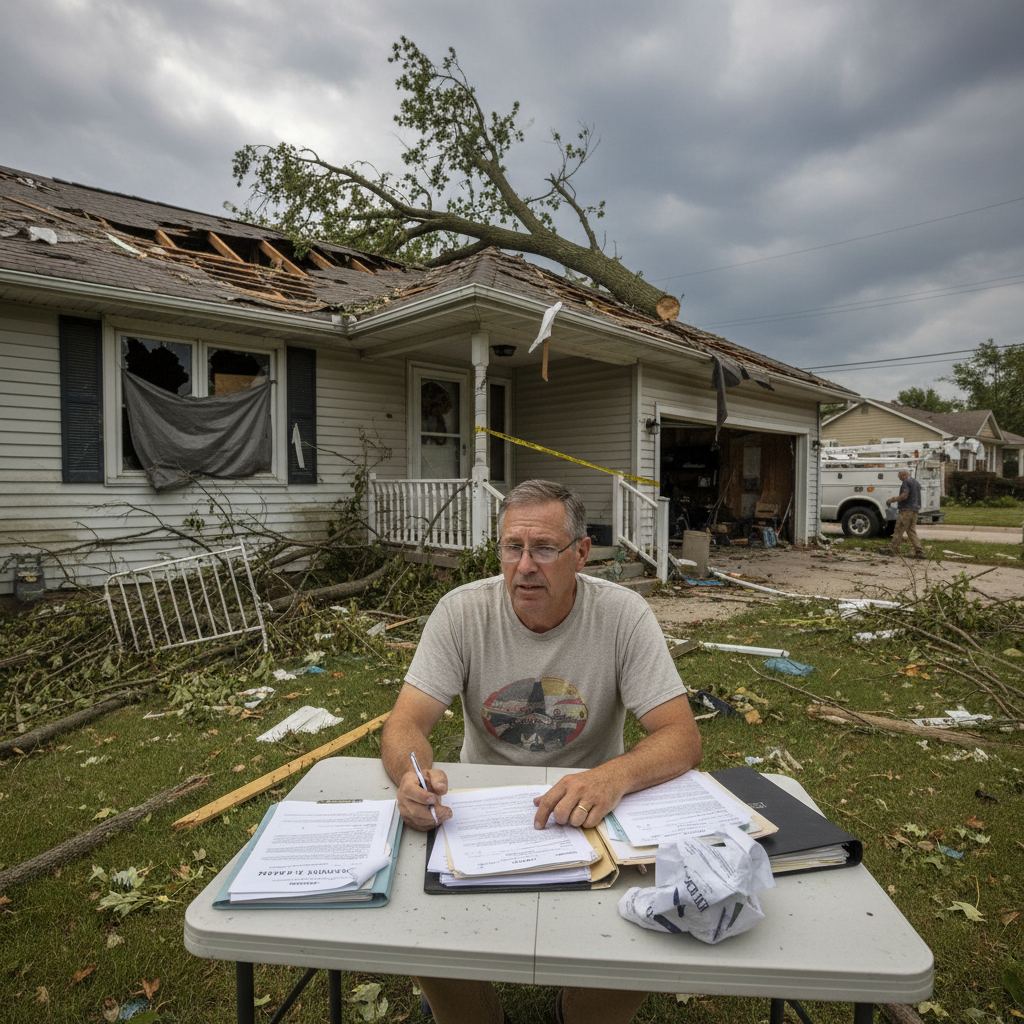
For Cleveland resident Marcus Greene, the costs came as a shock. After a spring windstorm shattered several windows and damaged siding, he learned his deductible was $6,800. “We had some savings, but not that much just sitting around. We had to take out a personal loan to cover it,” he explained.
Financial advisors are now urging homeowners to not only review their policies annually but to set aside a dedicated fund for deductibles and repairs.
“You have to treat your insurance deductible like you would any other emergency expense,” said Tammy Jenkins, a financial consultant based in Milwaukee. “It’s no longer a rare situation—it’s part of modern homeownership.”
Homeowners Take Preventative Action
Some are choosing to take matters into their own hands by investing in preventative upgrades—storm windows, reinforced roofing, sump pumps, and updated drainage systems.
In Minneapolis, where heavy snow can lead to ice damming and roof leaks, homeowner associations are encouraging residents to conduct regular roof maintenance and inspections, especially before the winter months.
Others are exploring options with their insurers to adjust policies to more manageable deductibles—sometimes accepting slightly higher premiums in return.
Industry Advocates Call for Transparency
Insurance watchdogs and consumer advocacy groups are pushing for clearer communication from insurance providers. The goal: to ensure policyholders understand their coverage limits and deductibles before disaster strikes.
“There’s still a significant gap in consumer awareness,” said Rachel Stein, a policy analyst with the Consumer Insurance Reform Network. “Deductibles used to be straightforward. Now, they’re variable and sometimes buried in fine print.”
Stein urges homeowners to ask direct questions when renewing policies: What is the deductible for wind and hail? Are deductibles percentage-based or fixed? Is there a separate deductible for named storms?
What Midwestern Homeowners Can Do Now
Experts suggest three key steps for navigating the evolving insurance landscape in the Midwest:
- Review Your Policy – Take time to understand your deductible structure, especially for weather-related claims. Know whether it’s fixed or percentage-based.
- Build a Repair Reserve – Set aside money for emergencies that won’t be covered until after your deductible is met.
- Strengthen Your Property – Make structural improvements that could prevent damage and potentially lower premiums.
As Midwest weather patterns continue to challenge aging infrastructure and raise insurance risks, the region’s homeowners are being asked to shoulder more responsibility—both financially and strategically. In this new reality, preparedness may be just as important as protection.