- calendar_today August 12, 2025
.
Over the past 25 years, Washington and New Delhi “cultivated one of the most important strategic partnerships of the post–Cold War era,” as former U.S. National Security Council senior director for India and Pakistan Alex
Togadia recently wrote in Foreign Policy.
Now, with U.S. President Donald Trump putting steep tariffs on Indian goods and Modi continuing to buy Russian oil, this close strategic relationship between the world’s two largest democracies is on life support.
“Look, we’re in a situation in the U.S.-India relationship where the premises and assumptions of the last 25 years that everyone worked very hard to build, including the president in his first term, have just come completely unraveled. The trust is gone,” Evan Feigenbaum, South Asia chair at the Carnegie Endowment for International Peace, told FP.
It all started back in May when Trump slapped an escalating tariff on most Indian imports in retaliation for Modi’s government continuing to buy Russian oil. The tariff began at 25 percent and is scheduled to rise to 50 percent on August 27. Instead of buying less Russian oil, India is buying more.
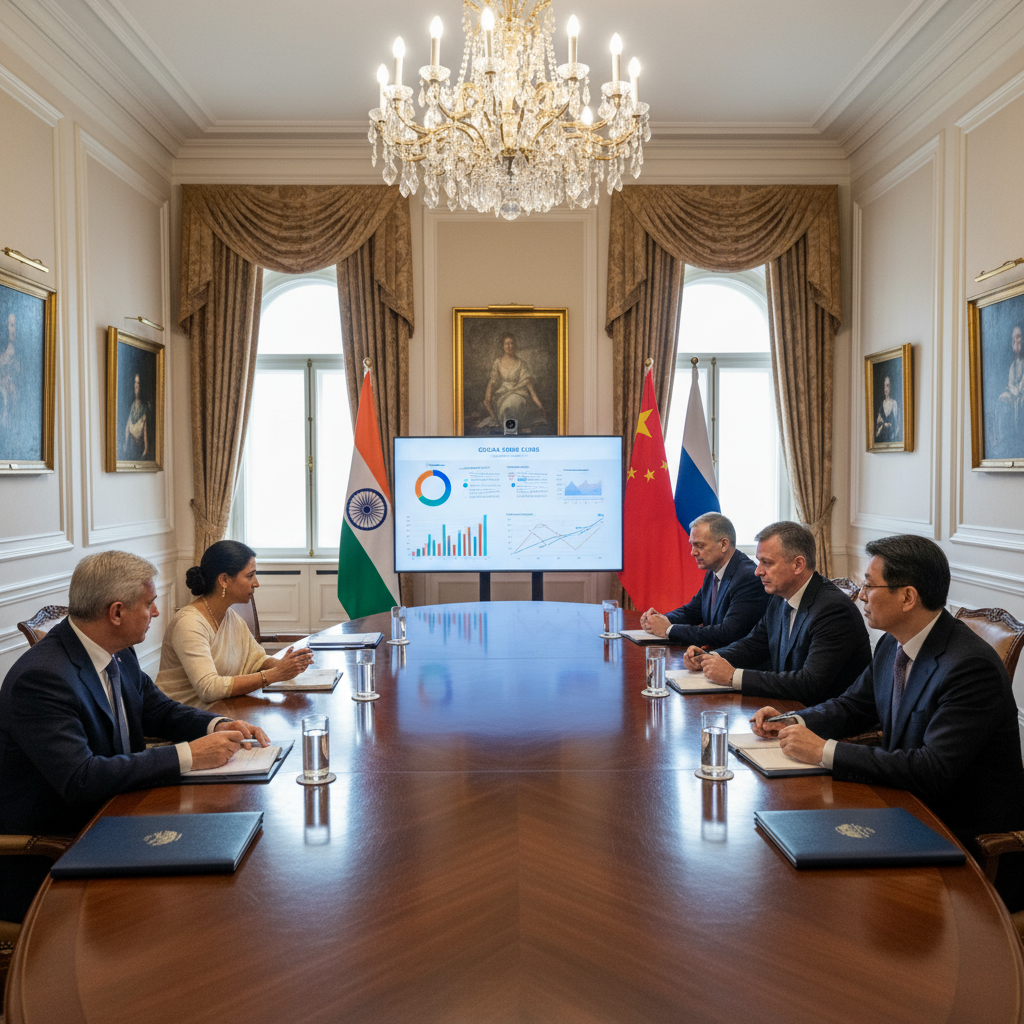
Last week, Indian national security adviser Ajit Doval was in Moscow for talks with President Vladimir Putin. Indian Foreign Minister Subrahmanyam Jaishankar also visited Moscow in July and just completed high-level discussions with Russian Foreign Minister Sergei Lavrov on Wednesday.
At the same time, Chinese Foreign Minister Wang Yi just finished a visit to New Delhi, and Modi is expected to travel to China for the first time in more than seven years later this year. Putin is also planning to welcome Modi to Moscow later this year.
“We should not underestimate how significant this shift in the Indian calculus is,” said Feigenbaum. “Indian public opinion is not happy with this, either. They’re signaling very clearly that they view that as interference in India’s foreign policy, and they are not going to put up with it.”
In other words, India is sending Washington a very clear signal that it is going to continue buying Russian oil and not be browbeaten by tariffs.
“Maybe rhetorically they want to keep all their options open,” Feigenbaum said, “but substantively, we’re going to see them significantly deepen their economic and military ties to Russia.”
India had already been quietly weaning itself off of Russian defense equipment, opting for U.S., French, and Israeli weapons over Moscow’s hardware. It had also just ramped up defense trade with Russia in April. But once Russia invaded Ukraine, the energy relationship between the two countries took off.
Indian state-run refiners had halted Russian oil purchases for a few weeks after the war started because of concerns about Western sanctions and the logistical challenges of receiving Russian oil under those sanctions. But then they decided to buy Russian oil anyway, and they’re getting a discount of six to seven percent, Kugelman noted.
In May, Russian oil made up 24 percent of India’s imports, a more than tenfold increase over its share before Russia invaded Ukraine. But now it’s up to 35 percent of the country’s total imports.
Moscow is moving in for the kill. Russian Deputy Prime Minister Denis Manturov said Moscow “will be shipping crude oil, oil products, thermal and coking coal for India, as well as electricity. We also see potential for the export of Russian LNG.”
Trump’s Tariffs Only Part of the Story
Feigenbaum was careful to point out that India’s rapprochement with Russia and China has little to do with Trump.
“In many ways, this is something we should have seen coming from Delhi one year ago,” he said.
Feigenbaum added that he had been “jaw-dropped” when India first responded to Trump’s tariff by turning to Russia and China instead of challenging the tariffs.
But Kugelman of the Wilson Center said that Trump’s tariffs have “added insult to injury.”
“If you look at the trajectory of India-China relations over the past year or so, and even stretching back into 2021, that trajectory was clear even before the Trump administration’s tariff announcement,” he said. “We’ve seen indications for almost a year of India wanting to ease tensions with China and strengthen relations, mainly for economic reasons. But the Trump administration’s policies have made India want to move even more quickly.”
In other words, Trump’s tariff was the “last straw,” Kugelman added.
As for Modi’s China visit, some of it is “performativity, but not all,” Feigenbaum said. “India is going to double down on some aspects of its economic and defense relationship with Russia — and those parts are not performative.”
But Kugelman thinks Modi has been motivated mainly by political calculations at home.
“The fact of the matter is India has been buying more oil from Russia than it otherwise would have because Modi is all about optics and parading around India as a stalwart defender of national sovereignty,” he said. “He’s making all these shows about protecting the interests of farmers and small businesses and millennials.”
By not kowtowing to Trump on tariffs, Modi “projects this image of India remaining strong in the face of pressure from Washington,” Kugelman said.
This is a political message for domestic consumption: “India has given up a lot over the past year. It already gave on several issues that the U.S. had been pushing,” he said, listing tariff reductions on goods such as pulses and reducing its ban on sending workers home.