- calendar_today August 21, 2025
.
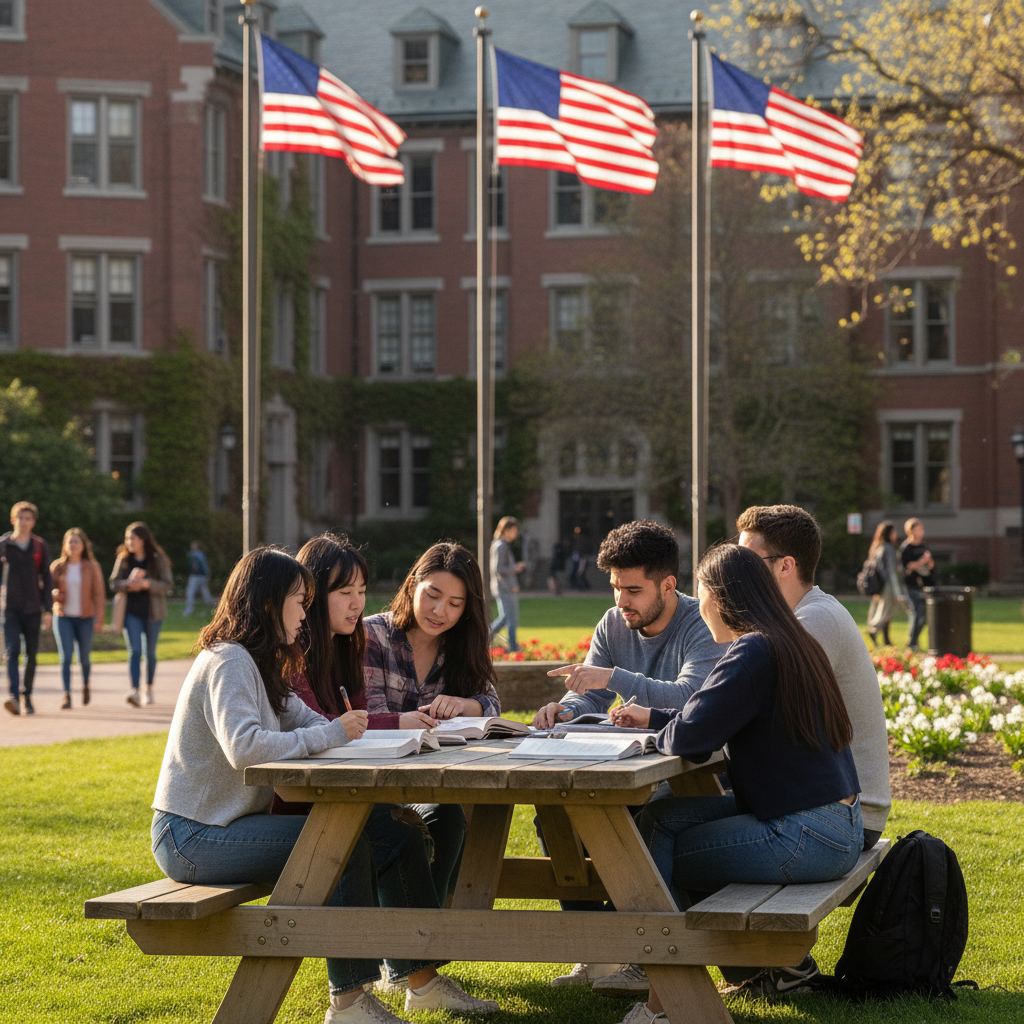
Former President Donald Trump vowed on Monday to admit 600,000 Chinese students to American colleges and universities, a potential thaw in the U.S.-China relationship after months of escalating tariffs and tensions.
In a press conference at the White House, Trump said China’s students should still be allowed to study in the United States even as his administration moved to levy tariffs on Chinese goods and threatened additional restrictions.
“Every time I see, I hear so many stories that we’re not going to allow their students,” Trump said. “We are going to allow their students to come in. It’s very important, 600,000 students. It’s very important. But we’re going to get along with China.”
Trump’s comments came in the context of an extended trade war between Washington and Beijing, during which the Trump administration has enacted wide-ranging tariffs on Chinese-made goods and levied further penalties for some of China’s more advanced technology. This year, the U.S. levied a 145 percent tariff on all Chinese goods, to which China responded with a 125 percent tariff on U.S. exports. The back-and-forth has raised the prospect of a long-term economic cold war between the world’s two largest economies.
Negotiators have paused on new tariffs after reaching a deal in Geneva in May, but Trump has threatened new penalties in recent weeks. Last week, he suggested imposing a 200 percent tariff on magnets imported from China. Trump has also argued that China has effectively cornered the market for the magnets, and that the U.S. would have to wait a year to build domestic production.
“China, intelligently, went and they sort of took a monopoly on the world’s magnets,” Trump said. “It’ll probably take us a year to have them.”
Trump is allowing 600,000 Chinese students to come to the U.S. to study, but the White House has also suggested it will maintain its hardline economic policies.
Trump’s statement is a stark reversal of the Trump administration’s recent position on Chinese students and suggests a possible shift in U.S. policy on visas. In May, then-Secretary of State Marco Rubio said his department would “aggressively revoke” visas for some Chinese citizens, particularly those with ties to the Chinese Communist Party or those employed in sensitive research or development areas. The plan sparked alarm from universities, which raised the prospect of lost funding and talent.
Trump himself has moderated on the issue, telling reporters in June that he has “always been in favor” of Chinese students coming to the United States. On Monday, he doubled down on that statement, clarifying that he would maintain a hard line on tariffs while leaving the door open for international education.
In the past, there have been around 270,000 Chinese students in the U.S. At 600,000, the number would more than double, representing both the scale of the offer as well as its potential economic impact for U.S. colleges and universities, many of which rely on foreign students’ tuition.
The potential for economic relief for universities from a new Chinese wave contrasts with Trump’s hardline rhetoric. His comments came one day before he was scheduled to meet South Korean President Lee Jae Myung in Florida. Trump was also asked if he was open to a summit with Chinese President Xi Jinping. “I would like to meet him this year,” Trump said, adding that he believes communication would be positive.
“As you know, we’re taking a lot of money in from China because of the tariffs and the different things. It’s a very important relationship,” he added. “It’s a much better relationship economically than it was before with Biden. But he allowed that. They just took him to the cleaners.”
The president paired his visa announcement with another volley on tariffs, suggesting his administration would not soften on Chinese economic competition, but could still find opportunities for cooperation. Trump’s comments also suggested that he is using the specter of inviting more Chinese students to the United States as a bargaining chip in his wider negotiations with Beijing.
For U.S. universities, the increase could be a boon. American universities have been in decline since the beginning of the pandemic, and a doubling in Chinese students would provide a potential lifeline for many schools. International students already contribute billions to the U.S. economy each year through tuition, housing, and other living expenses. Increasing Chinese student enrollment from 270,000 to 600,000 would shift American enrollment dynamics and give schools a needed financial boost.
At the same time, the administration’s actions also highlight the contradiction in the U.S. government’s positions. On the one hand, some Chinese students and professionals will see their visas revoked; others will see the door opened even wider. And the administration has both levied broad tariffs on Chinese goods and left the door open for top-level summits with Beijing.
For now, Trump’s announcement will be followed closely in Beijing and in U.S. universities. Both policymakers and educators are waiting to see whether his rhetoric will become policy, and whether more Chinese students will help thaw the relationship.