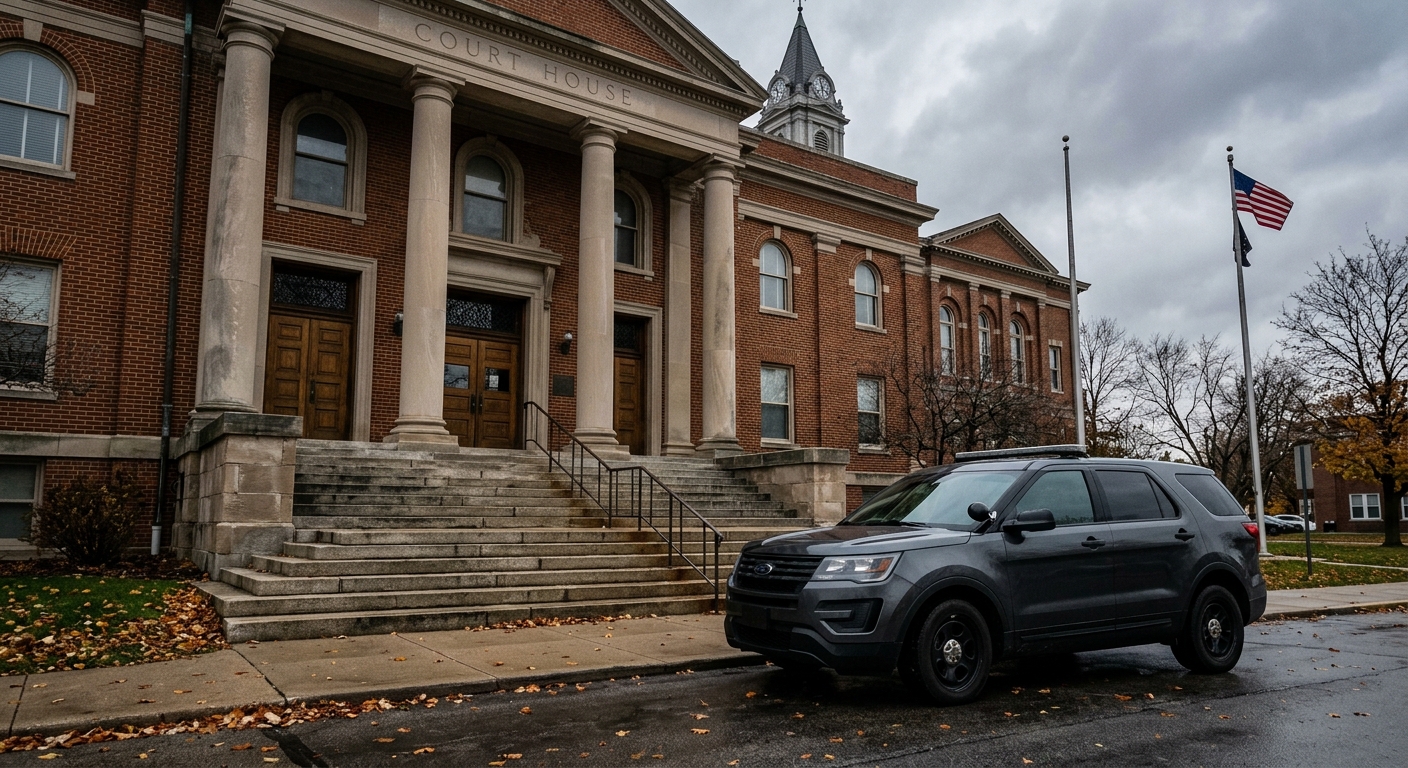
AI-generated illustration; not a photograph of the reported event.
- calendar_today October 9, 2026
ICE Agent Faces State Charges Stemming from Operation Metro Surge
A Minnesota judge is set to weigh a significant legal dispute over where an immigration enforcement officer should be tried for allegedly pointing a firearm at civilians. The case involves U.S. Immigration and Customs Enforcement (ICE) agent Gregory Morgan Jr., who faces two counts of second-degree assault. The incident occurred during Operation Metro Surge, a 10-week immigration enforcement initiative in the Twin Cities.
Background of the Incident
According to court records, the confrontation unfolded on February 5 as Morgan drove an unmarked Ford Expedition with his law enforcement partner on Hwy. 62. They were traveling on the shoulder when a Cadillac, attempting to "cut him off a little bit," blocked their path. The Cadillac's occupants later told police they were unaware the SUV occupants were law enforcement. Morgan reportedly drew his gun and pointed it at the car's passengers. One passenger then called 911, stating, "A guy just aimed his gun at me … he just aimed a Glock at my face."
State Versus Federal Jurisdiction
Hennepin County Attorney Mary Moriarty is pressing for a state court trial, arguing Morgan's actions represented "extremely dangerous conduct" not related to his federal duties. This is the first felony charge in the country against a federal immigration agent for on-duty conduct. The outcome may serve as a litmus test for determining how courts address charges against federal officers related to state law violations.
Moriarty's office has also charged another federal officer, Christian Castro, in a separate case involving the shooting of Julio Sosa-Celis during the same enforcement action. Castro faces state assault charges as well as a federal indictment for allegedly lying to the FBI. Both cases have garnered national attention over the boundaries of law enforcement jurisdiction and accountability.
Defense Argues Federal Immunity and Use of Force Policy
Ryan Pacyga, Morgan’s attorney, claims his client is immune from state prosecution under the U.S. Constitution’s Supremacy Clause, maintaining that Morgan was enforcing federal law and responding to imminent bodily harm. Pacyga emphasized that Morgan and his colleagues faced significant hostility during Operation Metro Surge, including being subjected to racial slurs and having objects thrown at them. He further stated that ICE's use-of-force policy, unlike Minnesota law, does not require agents to retreat when threatened. Pacyga called for the case to be heard in federal court, asserting, "Agent Morgan has the right to have this case heard in federal court."
The U.S. Justice Department supports this move, arguing Morgan was confronted by civilians "repeatedly interfering with his federal law enforcement duties" and justifiably responded with force. The department insists the core issue is whether federal officers may act forcefully when faced with immediate threats, stating, "They can."
Key Arguments from Prosecutors
The prosecution maintains Morgan’s conduct was unrelated to immigration enforcement. They highlight that the individuals in the Cadillac were seemingly responding to Morgan’s driving and that he had no basis to believe either occupant was unlawfully present in the country. Prosecutors state that ICE agents do not have authority over traffic infractions and assert, "There is no evidence of any job-related circumstance requiring the defendant to rush to his destination or to drive on the highway shoulder to get there."
The state also contends ICE authority does not extend to general patrol activities or engaging with motorists over traffic violations, reinforcing their argument that the case should remain in state court for a state court trial.
Courtroom Developments and Fifth Amendment Rights
The proceedings, overseen by U.S. District Judge Nancy Brasel, have also addressed the rights of the Cadillac's passengers, who expressed fear of prosecution and sought to avoid testifying. Their attorney accused the Justice Department of witness intimidation, a claim the DOJ rejected as "unnecessary vitriol." Judge Brasel declined to excuse the witnesses and refused their request for immunity, stating they are entitled to invoke their Fifth Amendment rights if they choose.
Potential Impact and What Lies Ahead
If the matter transfers to federal court, it would mark a historic moment in Minnesota, as the prosecution would proceed under state law but within the federal court system. The outcome could influence future cases involving law enforcement jurisdiction, federal immunity, and use of force in the context of immigration enforcement operations.
Source: startribune.com.