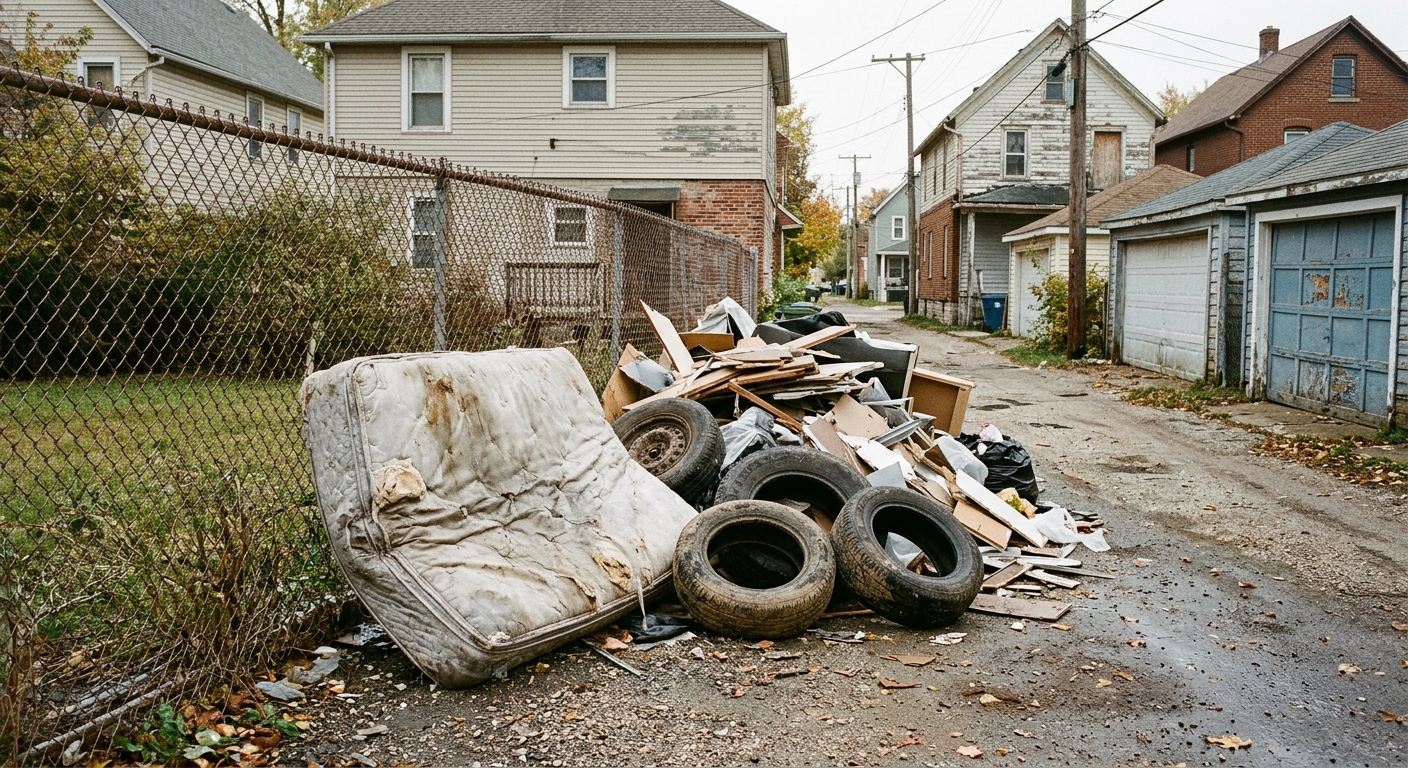
AI-generated illustration; not a photograph of the reported event.
- calendar_today October 26, 2026
Illegal Dumping Plagues North Minneapolis
North Minneapolis faces an ongoing battle with illegal dumping, with trash accumulating in greater quantities than any other area of the city. Residents, city officials, and community advocates are working to address pervasive issues ranging from abandoned mattresses and tires to entire buses left in alleys and lots.
Council Member Vetaw Tours Neighborhood Trash Hotspots
LaTrisha Vetaw, a Minneapolis City Council member representing the North Side, recently conducted a tour of some of the area's most affected sites. Joined by her staff, Vetaw highlighted locations notorious for illegal dumping, including alleys where furniture, construction debris, and household items are indiscriminately tossed.
In one case, a mountain of trash piled beside a "NO DUMPING ALLOWED" sign and a warning about security cameras exemplified the disregard for local ordinances. The accumulating debris included an assortment of discarded household goods, broken furniture, and large black bags.
Mapping and Identifying Dumping Hotspots
Following a guided tour by Vetaw, the city's public works team developed a map identifying illegal dumping hotspots. According to Nick Gerold, Minneapolis Director of Solid Waste and Recycling, Vetaw's ward experiences noticeably higher rates of illegal dumping than any other part of the city.
Gerold stated, “There’s no doubt her ward is hit more than other spot in the city, and it’s not close.” Residents report near-daily instances to Vetaw’s office regarding fresh piles of trash, underscoring the extent of the problem.
Community Voices Highlight the Issue
Jonathan Mason, a local resident, drew attention to the problem last year with a widely shared video that captured towering heaps of dumped items—tires, mattresses, televisions—on an empty lot at 23rd and Lyndale avenues. His video called on local leaders and authorities to address what he described as a landfill in the heart of the city. In response, city crews barricaded the street, cleared the lot, and erected fencing. However, officials note that such cleanups can sometimes prompt further dumping.
Challenges in Enforcement and Waste Management
Officials believe much of the dumping results from junk haulers and individuals from surrounding suburbs seeking to avoid disposal fees. Large items, such as used furniture and tires, are frequently left in alleys, on the side of the road, or even in empty lots, especially around the beginning of each month during peak moving times.
While Minneapolis provides residents with six annual vouchers for bulk item disposal at a south Minneapolis transfer station and offers large item pickup at no extra fee, Northwest Minneapolis lacks a dedicated drop-off facility. The city’s plan for a northeast station is currently paused.
Enforcement remains difficult. Gerold explained that solid evidence, such as clear images of violators' faces and license plates, is needed for citations. Only one citation has been issued in the past two years. Small fines provide little deterrence, especially compared to the amounts paid for illegal hauling and disposal services.
Community Response and Ongoing Challenges
Vetaw’s office continues to record incidents of illegal dumping. In one case, they counted 40 dumped mattresses near the Upper Harbor Terminal project area. The city later cleared and blocked off the affected road, but officials and residents emphasize that repeat dumping and limited enforcement challenge the city’s ability to maintain clean neighborhoods.
According to a 2019 University of Michigan study, trash-filled neighborhoods experience not only negative impacts on mental health but also an increase in violent crime. While overall crime has decreased recently in north Minneapolis, the ongoing dumping detracts from community quality of life and poses a constant challenge for residents and city officials alike.
Source: startribune.com.