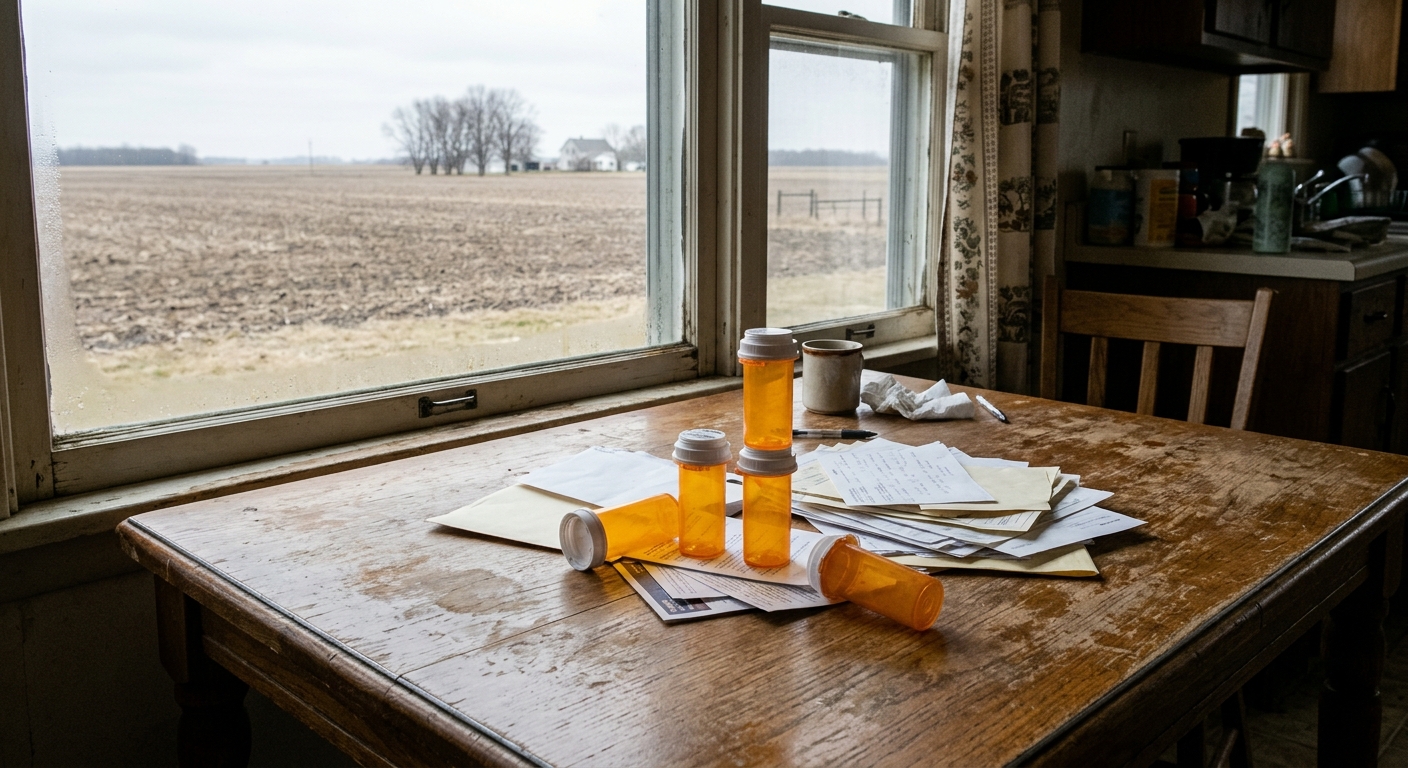
AI-generated illustration; not a photograph of the reported event.
- calendar_today October 25, 2026
High Rates of Uninsurance Persist in Rural Minnesota
In 2026, the challenge of securing reliable health insurance continues to confront many residents in Minnesota’s rural communities. In west-central Minnesota, more than 11% of people remain without health insurance, a rate significantly above the statewide rural average of nearly 7%. Cassian Baumgartner, a 21-year-old from Detroit Lakes, exemplifies the struggle, earning too much for subsidized care yet not enough to afford coverage independently. For Baumgartner, the lack of health insurance coverage means facing prohibitive costs for necessary medications — $800 every six weeks for migraines caused by sports concussions, and $200 per month for asthma inhalers.
Pharmacy Closures Diminish Rural Medical Access
Recent developments have further strained rural medical access. Earlier this year, four towns in west-central Minnesota lost their only pharmacy, a pattern repeated in other areas. The town of Pelican Rapids has also been notified that its ambulance service will end in 2027, raising concerns about emergency rural health care.
Health Insurance Premiums on the Rise
The burden of health insurance premiums is mounting. Mahnomen County has seen an 18% increase in premiums for county employees, more than double the budgeted expectation. Becker County faces an even steeper hike of 24%. These rising costs add to the challenges faced by rural families and workers, many of whom juggle multiple jobs or self-employment.
Impending Medicaid Cuts and Eligibility Changes
Policy shifts at the federal level are set to impact rural Minnesotans further. Starting in 2027, changes to Medicaid will require recipients to prove medicaid eligibility every six months, doubling administrative workloads for county offices and placing an added burden on enrollees with long commutes. Advocates warn these requirements may force eligible people off Medicaid inadvertently. Additional medicaid cuts are expected in the coming year, raising fears about further limited access to care for vulnerable populations.
Community Responses and Legislative Outlook
Democratic state legislators, including Sen. Lindsey Port and Sen. Rob Kupec, have toured the region to hear community concerns. At a forum in Detroit Lakes, Becker County Board chair Erica Jepson expressed apprehension about responding to upcoming changes: “Not well,” she admitted when asked about the county’s preparedness. State Senate Majority Leader Erin Murphy commented on the broader implications, noting, “We’re at the end of a system that’s coming undone. We have to write a new chapter.” There is hope to address health care reform in the 2027 legislative session, with plans discussed for a potential government health option available to more residents.
Personal Impact: Stories from Rural Minnesotans
Residents like DeAnna Motschenbacher, 59, of Detroit Lakes, illustrate the complex realities of the current health system. Motschenbacher, who is engaged but not married partially out of concern for losing state health insurance, says she and her fiancé cannot afford his employer-offered plan. Their situation underscores ongoing dilemmas as reforms lag and support structures remain uncertain. In rural Minnesota, the tension continues between competing approaches to health care access, with local families caught in the policy crossfire while large insurers report considerable profits.
Source: startribune.com.