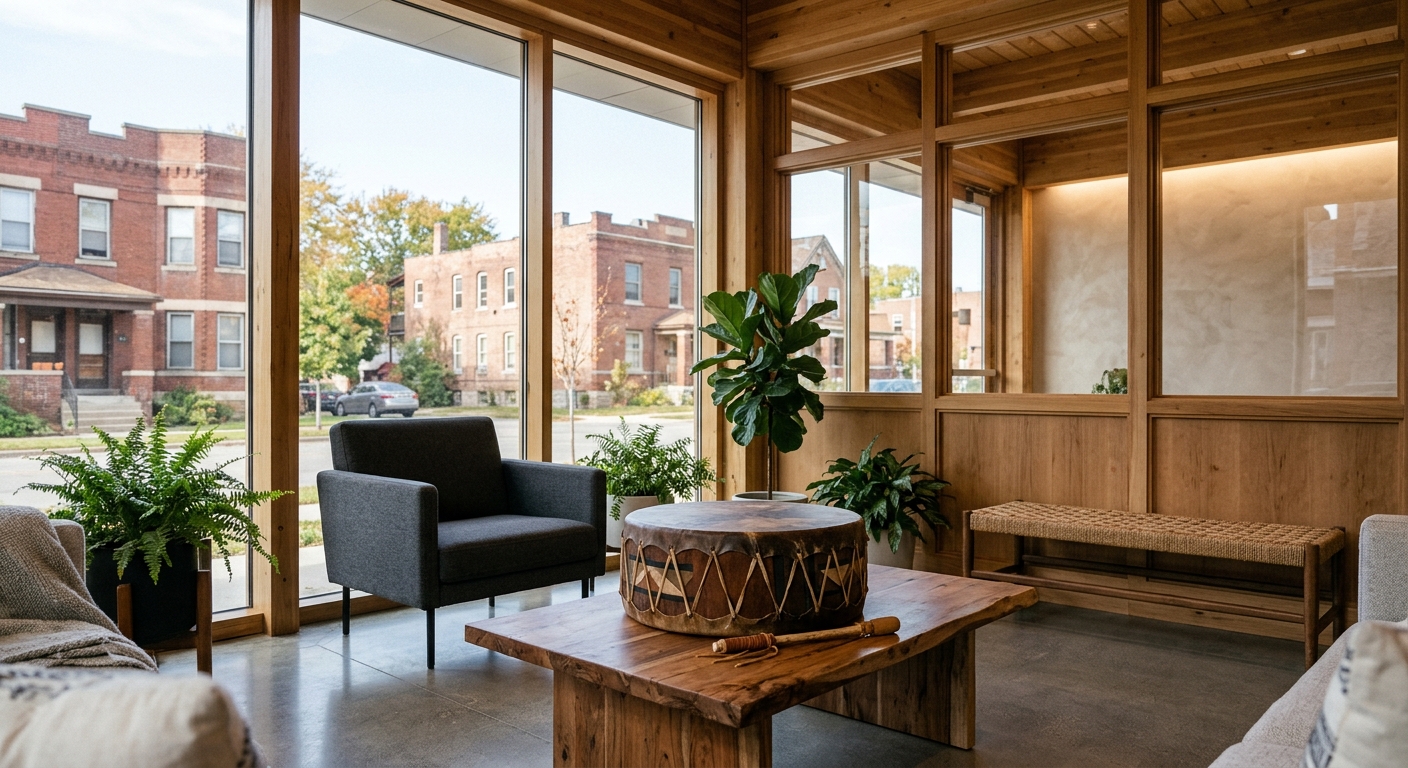
AI-generated illustration; not a photograph of the reported event.
- calendar_today October 25, 2026
Native-Led Clinic Expansions Address Health Disparities
Two prominent Native-run health clinics in south Minneapolis have opened newly expanded facilities, aiming to improve health care access for Native populations who have historically faced significant health disparities and limited culturally responsive care options.
Major Investments in Indigenous Healthcare
The Indian Health Board (IHB) introduced a $36 million, 40,000-square-foot addition at its 2027 E. Franklin Avenue location. Meanwhile, the Native American Community Clinic (NACC) unveiled a $67 million, six-story building at 1213 E. Franklin Avenue, which not only expands health services but also incorporates 83 affordable housing units on the upper floors.
Culturally Responsive and Comprehensive Care
Both clinics are committed to integrating Indigenous healing practices with Western medicine, reflecting a comprehensive approach to health and wellness. Ruth Buffalo, CEO of the Minnesota Indian Women’s Resource Center and chair of the health and wellness committee under Metro Urban Indian Directors, stated, “It’s critical that the populations in south Minneapolis gain more access to health care.” She emphasized the inclusivity and hope these expansions represent for the community.
Expanding Health Services and Community Outreach
The IHB now operates three clinics in the Twin Cities, serving over 4,800 patients in 2025, including 2,400 individuals who identify as Native American. Its services span dental, pediatric, maternal care, recovery, and counseling. The new facility features a three-story image of a jingle dress dancer and elements representing Sioux patterns and traditional constellations, symbolizing cultural pride and heritage.
Michael Harris, psychologist and director of communication at IHB, highlighted programs such as drum circles, craft groups, and language lessons, noting, “Culture is healing.” Dr. Patrick Rock, CEO of IHB, explained the importance of integrating traditional wellness with Western medical approaches for a holistic path to health.
NACC’s Clinic and Affordable Housing Model
NACC occupies the first two floors of its expanded building, offering a broadened range of services including maternal and child care, dental and behavioral health, addiction support, primary care, and outreach programs. The upper four floors provide 83 housing units, with 36 subsidized through partnerships like the Minneapolis Public Housing Authority, Section 811 housing for adults with disabilities, and Simpson Housing Services. The remaining units are rent-controlled. Funding for the project came from a combination of city, state, federal, and grant sources.
Ongoing Challenges and Community Impact
Despite these advancements, Dr. Antony Stately, CEO of NACC, highlighted that the Native community continues to experience poor health outcomes, often tied to systemic factors that require time to address. A 2024 study in the National Library of Medicine reported higher rates of mortality among American Indians and Alaska Natives from alcohol-related issues, drug overdose, injuries, and homicide compared to the general population, and federal health statistics show this group also has the lowest life expectancy at birth.
Joseph Regguinti, former fitness center manager at the Minneapolis American Indian Center and an advocate for recovery and cultural connection, noted the role of representation and shared experience in healing, saying that engaging through an Indigenous lens can make challenges easier to tackle by fostering strong community ties.
Looking Ahead
These expansions by IHB and NACC represent a significant investment in the health and well-being of the Native community in Minneapolis, setting an example of how combining traditional wellness with modern medicine and access to affordable housing can address the intertwined challenges of health disparities and social determinants of health.
Source: startribune.com.