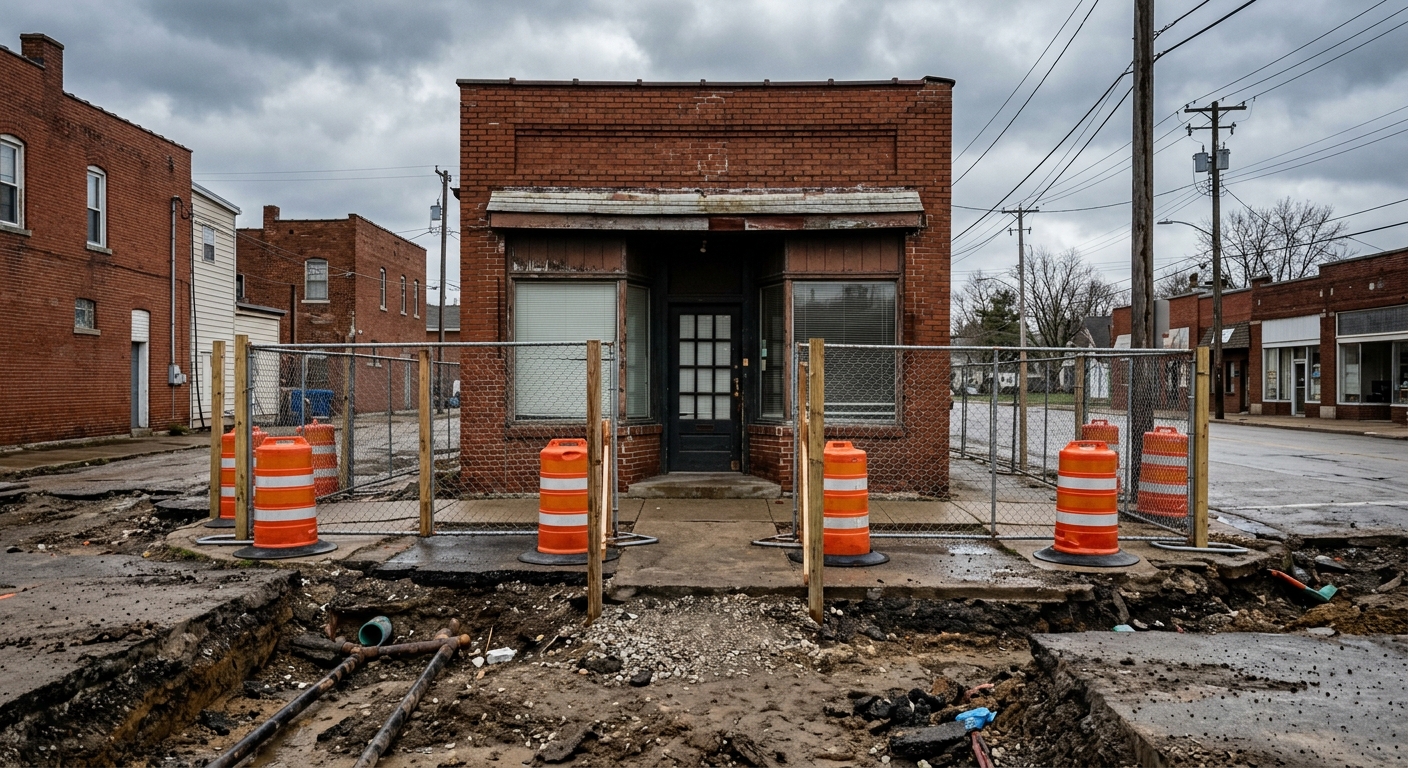
AI-generated illustration; not a photograph of the reported event.
- calendar_today October 10, 2026
Road Construction Brings Challenges to East Side Businesses
Businesses along E. 7th and Arcade streets are facing a difficult summer as ongoing road construction slows their recovery efforts since Metro Surge. Community members and business owners have raised concerns about reduced accessibility and declining sales, attributing many of these issues to the current Minnesota Department of Transportation (MnDOT) project reshaping the corridor from Interstate 94 in St. Paul to Roselawn Avenue in Maplewood.
Safety Concerns for Residents and Customers
Ruti Mejia, partnership director of Indigenous Roots, recounted how a blind, elderly man struggled to navigate construction outside their center due to inadequate signage and safety barriers. Mejia explained, “We care so much about the residents here, and we were advocating for him... it’s not OK that they don’t have a direct pathway.” Without clear routes, she worried that vulnerable pedestrians could face serious risks, such as falling into ditches or being struck by vehicles.
The MnDOT Project: Goals and Scope
The MnDOT project began in 2025 and is scheduled to conclude in early November. Its purpose is to improve safety in St. Paul through a series of infrastructure updates: new traffic signals, pedestrian lighting, sidewalks, curb bumpouts, and upgrades to meet Americans with Disabilities Act (ADA) standards. Mai Xiong, a MnDOT spokesperson and East Side resident, has worked on the project for over five years. According to Xiong, the project is partly funded through the Rebuilding American Infrastructure with Sustainability and Equity grant and features elements like landscaping not typical for MnDOT projects.
“I really do think that this investment on the East Side is worth it [for] the safety, road improvement," Xiong said. She emphasized the long-term enhancements the corridor and its businesses will experience once construction is complete.
Economic Impact on Local Businesses
The ongoing construction has created significant obstacles for small businesses. Indigenous Roots has seen decreased foot traffic and sales at its cafe and galleries, requiring the organization to adjust its programming and communications around last-minute street and parking changes. Henry Garnica, owner of CentroMex Supermercado, said sales have dropped between 20% and 60% as customers turn to alternative locations. “Many customers move and find another different business, the same kind, in different locations, only we don’t know if they are coming back,” Garnica shared.
Oscar Murcia, who owns El Guanaco Bakery and Cafe, reported that construction damaged his storefront’s door and estimated losses of nearly $7,000 a week over five to six months. “We need some help,” Murcia said. According to Paris Dunning, executive director of the East Side Area Business Association (ESABA), many local businesses have seen declines of 30% to 50% during the project.
Business Owners Seek Support
Kesia Garcia, who works at El Guanaco Bakery and Cafe, expressed that customers have sometimes blamed businesses for construction inconveniences, including lack of parking. Many local immigrant-owned businesses were still recovering from the economic impacts of the pandemic and Operation Metro Surge. Garcia remarked, “[MnDOT] could’ve taken that into account and be like, ‘We can postpone it until later,’ so it could give us room to recover from the three months we lost as well.” MnDOT, however, noted that projects are planned years in advance and work had already begun when other disruptions occurred. “There were a lot of things considered, but I think the most responsible thing to do was continue with road and safety improvements,” Xiong explained.
Community and Organizational Assistance
To help businesses navigate these construction challenges, organizations such as ESABA and the Latino Economic Development Center (LEDC-MN) have provided resources, technical assistance, marketing support, and financing. Andrés Salinas Sanchez, lending program director at LEDC-MN, stated that local businesses are trying to stabilize—catching up on debt, paying rent, and hiring back staff. The East Side Emergency Fund, managed by LEDC-MN, has provided $240,000 to 59 businesses during the construction.
Meanwhile, MnDOT continues outreach through project update emails, neighborhood presentations, and direct engagement with affected business owners. The hope among all involved is that completed improvements will eventually benefit the community and local commerce.
Source: startribune.com.