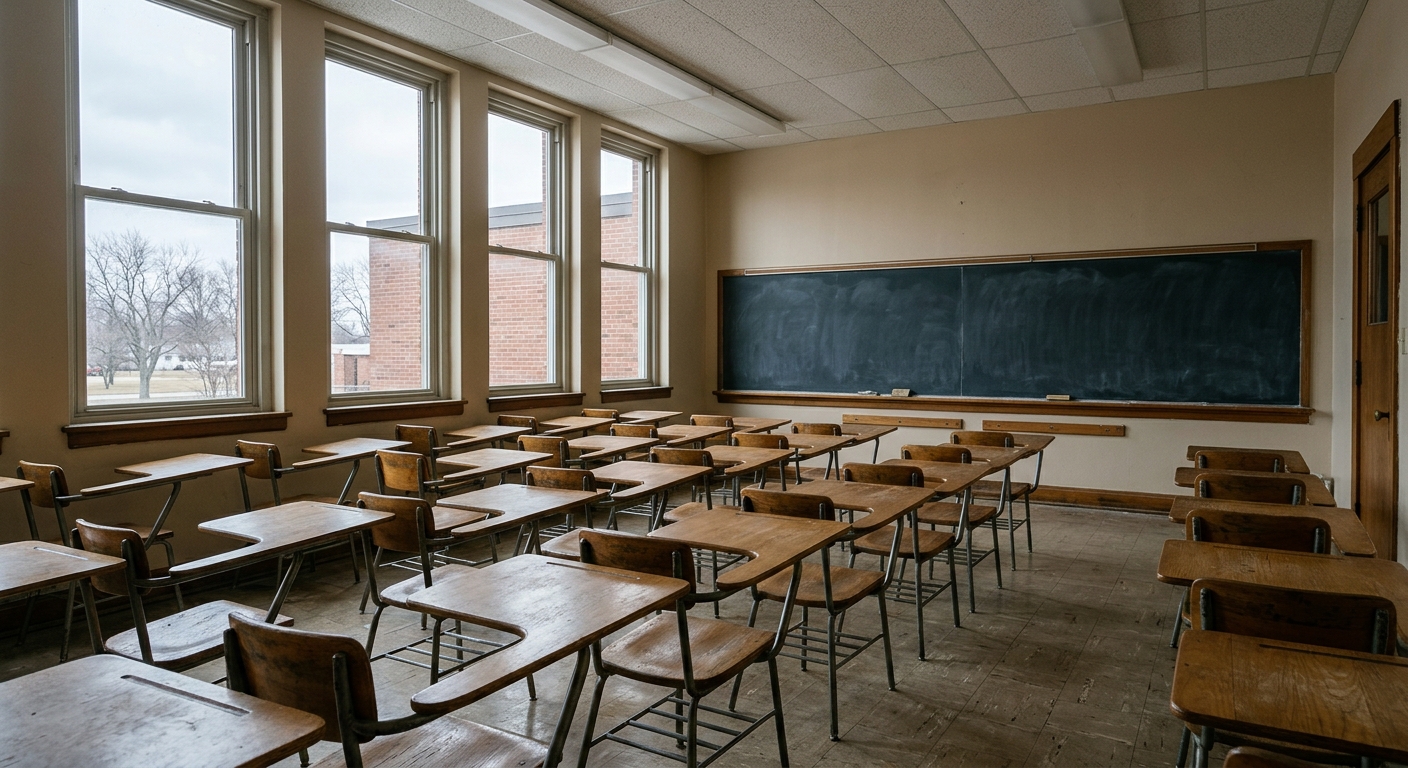
AI-generated illustration; not a photograph of the reported event.
- calendar_today October 22, 2026
Key School Board Election May Influence School Closures
The outcome of the upcoming Minneapolis school board election is poised to determine the future approach to school closures and financial management within the district. With five of nine seats open and most races contested, the make-up of the board could sway decisions on how to address the school district budget deficit and persistent challenges related to underused school buildings.
Union-Backed Candidates and the Debate on Closures
Of the nine candidates vying for the five seats, four are backed by the teachers’ union, with their platforms emphasizing that closing schools in response to the budget deficit should be a “last resort.” Progressive advocacy group TakeAction Minnesota has also endorsed some candidates, while two contenders are supported by the Minnesota Parents Alliance, known for backing more conservative candidates. All candidates welcomed the board’s October decision to delay any school closures until the 2028-2029 school year, shifting their focus to alternative ways of addressing financial strain.
District Faces Enrollment and Budget Pressures
The Minneapolis Public Schools district currently serves approximately 30,000 students in buildings designed for 43,000, with over half of the 56 schools operating below 70% capacity. District leaders have faced a nearly three-year effort to right-size the district, contending with multimillion-dollar shortfalls—most recently a nearly $40 million deficit as they prepared the budget for the current school year. Plans to close or merge schools drew significant opposition from parents and educators, particularly proposals that could have affected up to 16 schools and required attendance boundary changes.
Election Context and Candidates' Priorities
This year’s attention to the Minneapolis school board election is heightened by these big issues, echoing a statewide pattern: 304 districts in Minnesota are holding board elections this year, up from 187 last year. Neighboring districts, such as Robbinsdale and Forest Lake, are also wrestling with financial pressures and have multiple board seats up for election.
Candidates in Minneapolis are proposing various measures to tackle the budget challenges. Some urge thorough budget audits and administrative cuts before resorting to closures, while others advocate strategies to retain families and increase school enrollment. Technology use, special education support, and improving educational resources have appeared as focal points in candidate discussions.
Superintendent’s Role and Board’s Next Steps
Most candidates express support for Superintendent Lisa Sayles-Adams, whose contract was recently extended to 2030 following her recommendation to halt closures in response to family pushback. Nevertheless, some candidates, such as Michael Baskins, have voiced skepticism about her leadership, linking ongoing trust issues to the district’s fiscal and enrollment woes.
Despite differences on whether school consolidation is inevitable, candidates, including those with union endorsements, generally agree that closures should not be the automatic response and must be part of a comprehensive, transparent plan. Some, such as educator Stephanie Johnson, contend that merging schools may ultimately be necessary given thinning educational resources and the district’s financial situation.
Future Board Responsibilities
The newly elected members will start their terms on January 1, each serving for four years and earning between $20,000 and $22,000 annually, based on their position. Board member Sharon El-Amin, now running for Hennepin County Commissioner, emphasized the importance of unity and focus on transformative solutions for public schools. In the words of several candidates and advocates, ensuring that students remain at the center of decisions—and maintaining transparency about the future of Minneapolis public schools—will be critical as the district faces ongoing budget and enrollment challenges.
Source: startribune.com.