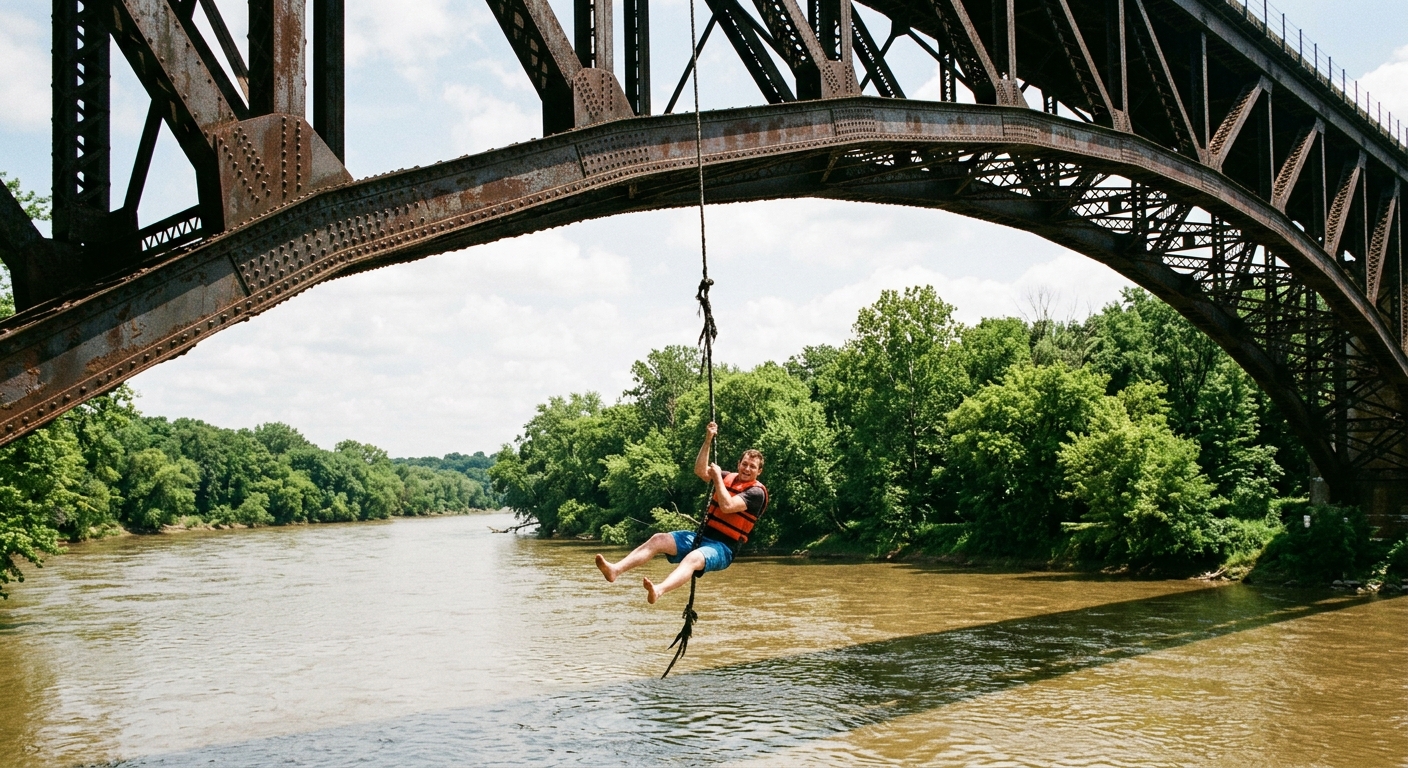
AI-generated illustration; not a photograph of the reported event.
- calendar_today September 20, 2026
In the heart of the Midwest, bridge swinging has emerged as an adrenaline-fueled attraction on the towering crossings of the Mississippi and Minnesota rivers in the Twin Cities area. This high-energy pursuit, which combines urban diving techniques with daring aerial acrobatics, has captured both local attention and social media virality.
Rising Popularity in Twin Cities
The Twin Cities region has recently become a hub for this growing trend, where athletes perform flips and dives off bridge platforms using ropes as makeshift swings. Videos featuring skilled practitioners such as Riley Johnson, a professional snowboarder, and Jonah Genser, a world-class cliff diver, have highlighted just how far bridge swinging and urban diving have evolved. Their dynamic routines are often cheered on by locals and even passengers aboard pleasure cruises along the Mississippi River.
Professional Athletes Seek Precision and Safety
Many of the participants in these events are professional athletes with extensive training in high risk activities. With backgrounds in snowboarding and cliff diving, they meticulously plan each stunt, balancing the thrill of aerial acrobatics with a calculated approach. Triple-checking the integrity of anchor points, using life jackets, and arranging spotters downstream illustrate the importance they place on safety precautions.
Legal and Environmental Considerations
Despite its popularity, authorities across the Midwest have emphasized that bridge swinging remains an illegal stunt, with violators facing possible trespassing charges. The presence of ropes and other gear on bridges without authorization is especially concerning for local law enforcement, who continue to issue public warnings about both the safety and legality of these activities. Incidents have underscored the hazards involved, reinforcing the need for caution.
The Mechanics Behind the Rope Swing
To ensure safety in performing such rope swing feats, participants have adopted advanced safety protocols. Anchor points are scrutinized, river depths confirmed using sonar technology, and environmental stewardship is prioritized. Practitioners make it a point to remove all gear post-event to prevent littering or lasting impact on the riverbanks and bridges.
Community and Athletic Camaraderie
What draws many athletes to bridge swinging in the Midwest is not just the rush of gravity and flight, but also the sense of community among fellow enthusiasts. The shared experience of overcoming fear and mastering technique creates a bond among participants, mirroring the camaraderie seen in other high risk activities. However, leaders in the community assert that these feats should only be attempted by those with significant expertise, warning the broader public against imitation.
Striking a Balance in the Twin Cities
As bridge swinging cements its presence in local subcultures of the Midwest, ongoing dialogue between athletes, authorities, and the public continues. The excitement and spectacle of bridge swinging and accompanying aerial acrobatics have undeniably put the Twin Cities on the map for extreme sports. Yet, concerns around illegal stunts and public safety compel both practitioners and officials to seek solutions that prioritize responsibility, legal compliance, and minimal environmental impact along the Mississippi River.