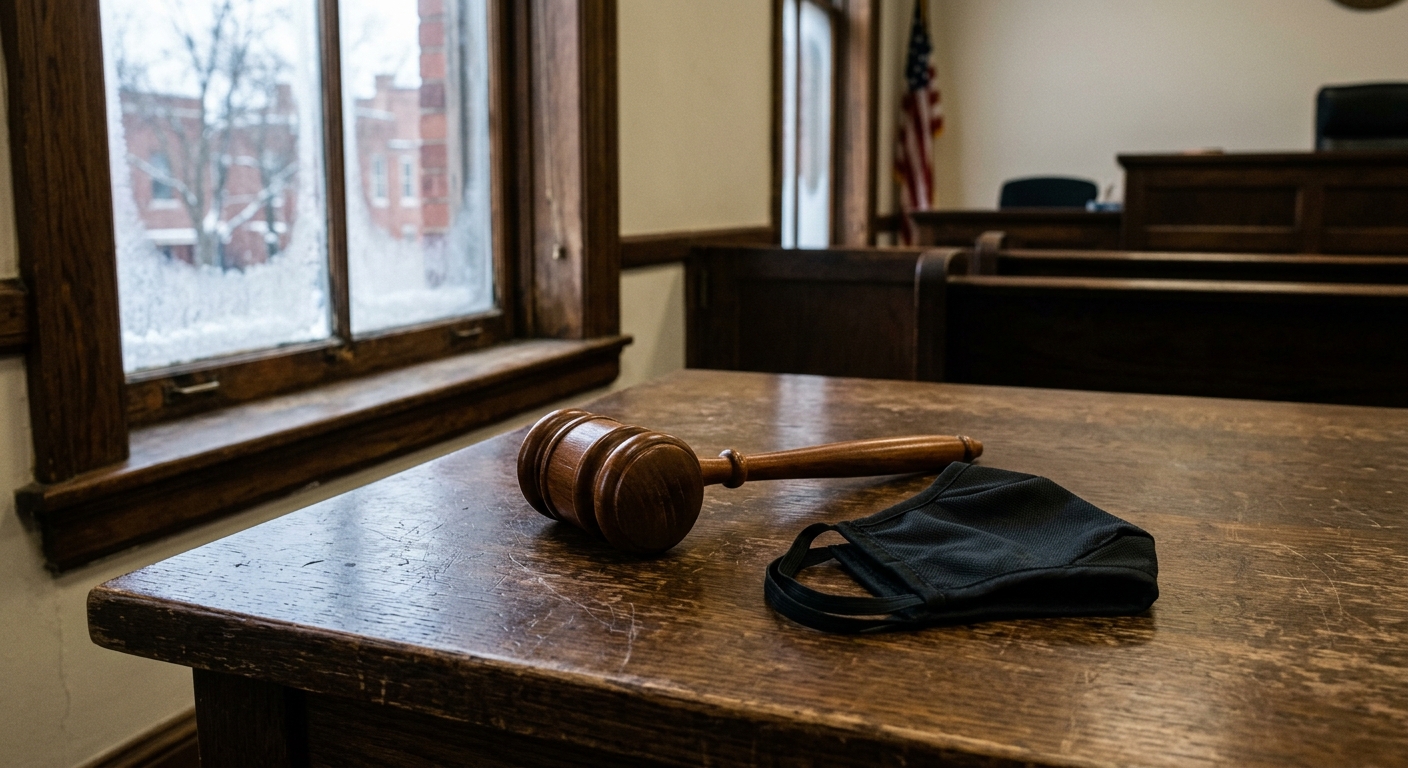
AI-generated illustration; not a photograph of the reported event.
- calendar_today October 15, 2026
Justice Department Files Lawsuit Against St. Paul
The Department of Justice (DOJ) has filed a lawsuit against the city of St. Paul, Minnesota, challenging newly enacted ordinances that prohibit federal law enforcement officers from wearing masks that conceal their identity and require agents to clearly display agency identification and their names while on official duty.
Background on St. Paul's Ordinances
The ordinances in question were adopted earlier in the year, near the end of Operation Metro Surge—a federal immigration enforcement initiative. St. Paul's City Council passed the mask ban on February 18, shortly after White House border czar Tom Homan announced the end of Metro Surge. Supporters of the ordinances argued they would promote transparency and accountability among law enforcement agencies operating in the city.
Federal Response and Legal Arguments
The lawsuit, filed Thursday in Minnesota federal court, names the city of St. Paul, Mayor Kaohly Her, the St. Paul Police Department, Chief Axel Henry, and City Attorney Irene Kao as defendants. According to the DOJ, the ordinances unconstitutionally seek to regulate federal officers and “recklessly disregard officer safety, public safety, and federal operational needs.” The complaint specifically asks the court to prohibit enforcement of both the mask ban and the identification requirement.
Officer Safety and Federal Operations
Federal officials claim that forcing officers—such as those from ICE (Immigration and Customs Enforcement) and Customs and Border Protection—to display their identities could endanger them and undermine federal operations. The DOJ argued that penalties for violating these city regulations, which could result in misdemeanor charges, may cause officers to hesitate in carrying out their duties due to the risk of citations.
Citing an internal investigation, the DOJ’s complaint details that the ICE Office of Professional Responsibility tracked 39 cases of doxxing or threats against ICE employees in Minnesota from January 2025 to March 2026. This figure represents about 28% of all such investigations nationwide over that period. The DOJ maintains that these cases highlight the risks associated with public identification of federal agents.
Local and National Context
St. Paul's actions come amid broader debates about the relationship between local and federal law enforcement. Minneapolis, for instance, does not require federal agents to show their faces, but has adopted a separation ordinance expressing opposition to local police collaboration with federal agents lacking clear identification. A similar statewide proposal to ban masks for federal agents failed in the recent legislative session.
Assistant Attorney General Brett Shumate of the Justice Department’s Civil Division emphasized the federal position: “The Federal Government, not state and local governments, gets to decide which equipment federal officers may or may not wear when performing their official duties.”
Broader DOJ Efforts and Court Rulings
The suit against St. Paul is part of a wider DOJ campaign to challenge local restrictions on federal law enforcement masks and identification requirements. On the same day, the Justice Department filed related cases in Milwaukee, Denver, and Portland. Federal attorneys have already achieved preliminary successes: mask ban measures have been temporarily blocked by judges in California, New York, and Philadelphia as legal challenges move forward.
City of St. Paul's Response
St. Paul officials, including the mayor and city attorney, declined to comment on the ongoing litigation.
Source: startribune.com.