- calendar_today August 7, 2025
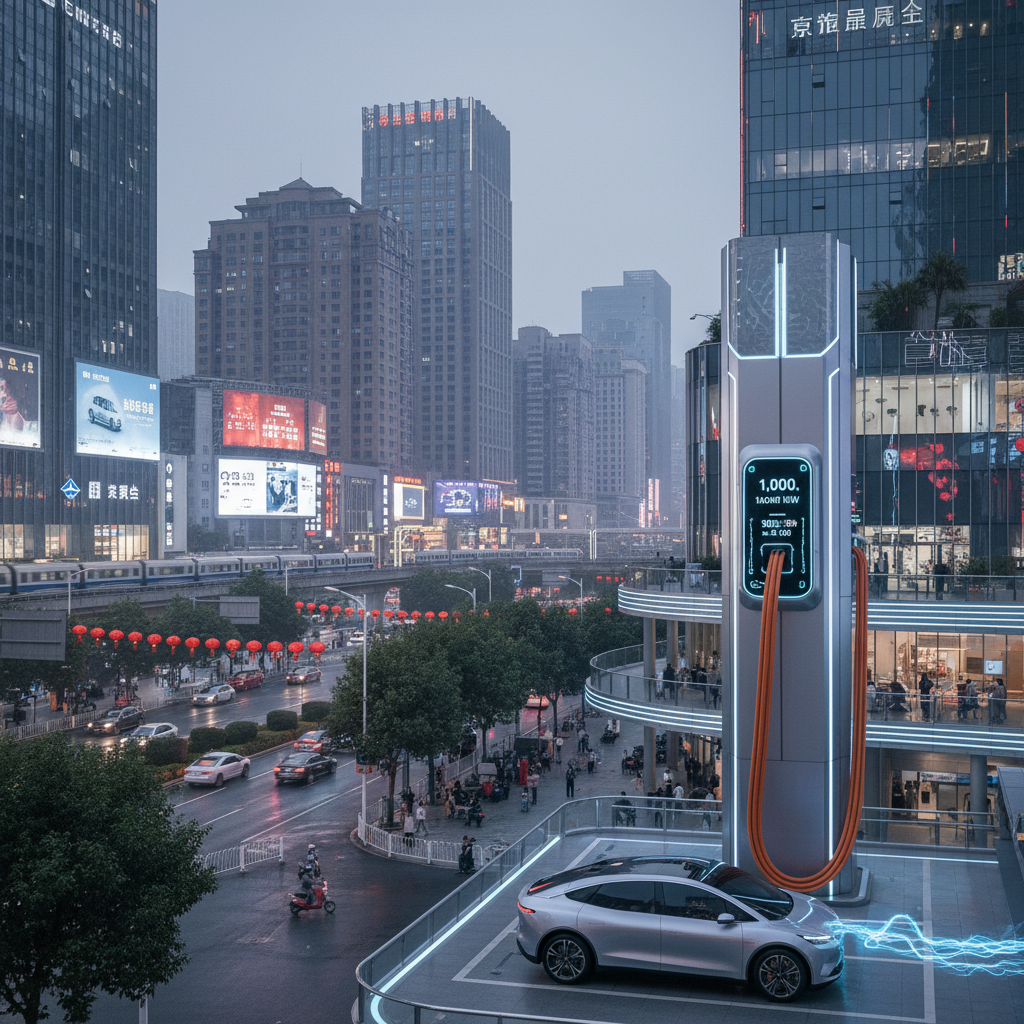
The introduction of BYD’s revolutionary 1,000 kW charging technology demonstrates a major technological advantage for Chinese electric vehicle producers in the area of rapid charging. This technological advancement combines the “super e-platform” with 10C charging abilities to provide an unparalleled 249-mile (400 km) range extension in a five-minute span. The current industry standards stand in stark contrast to this technology since the fastest chargers in Formula E stop at 600 kW and Tesla’s Superchargers manage only 250 kW. The breakthrough positions China as a leader in EV charging technology yet faces serious political obstacles that limit its market influence in the US and other countries.
BYD achieves its leading position through its capability to achieve 10C charging speeds along with 1,000 kW charging power output. The powerful charging speed enabled by this technology significantly cuts the EV refueling time while tackling a primary consumer issue. BYD chairperson Wang Chuanfu stated that the company intends to expedite EV charging to match the speed of gasoline car refueling while transforming the EV driving experience. BYD will initially introduce more than 4,000 megawatt chargers throughout China to support its new electric vehicle models Han L sedan and Tang L SUV.
The Technological Advantage: 10C Charging and 1,000 kW Output
Chinese EV manufacturers gain a substantial technological lead through their development of 10C charging capabilities and 1,000 kW power outputs. EV owners will benefit from this advancement while it establishes a new standard for charging speed. Fast charging capability that allows substantial range extension in minutes might boost EV adoption by reducing range anxiety and charging time worries which commonly discourage buyers. The launch of the new super e-platform represents a significant advancement in battery technology. The integration of advanced technology with new charging systems represents a major advancement for the electric vehicle industry.
US Market Barriers: Political Resistance and Protectionism
BYD’s advanced technology has not translated into US market access because political restrictions limit its entry into the nation. Congressional members representing different political affiliations have taken active steps to block Chinese EV manufacturers from accessing the US market. Political opposition arises from fears regarding national security risks alongside economic competition and domestic industry safeguarding. The protectionist approach obstructs the integration of Chinese EV advancements into the US market while slowing down America’s transition to electric vehicles.
American consumers cannot access BYD’s advanced charging technology immediately because of political resistance. Automakers with significant operations in the US may still choose to license this technology while political obstacles persist. Political factors could create barriers to these licensing agreements.
Navigating Range Standards and Potential Licensing
The importance of recognizing inconsistencies between range estimation standards cannot be overstated. BYD’s 249-mile range estimate utilizes the CLTC standard which produces higher results compared to the US EPA standard. The achievable range under EPA testing standards would probably reduce compared to the initial estimate.
BYD’s technology licensing remains feasible despite existing political barriers and range standard differences. Adopting faster charging standards in the US through licensing agreements would help close the technological gap while extending the benefits of rapid charging to more consumers. US consumers would be able to benefit from advancements in charging technology through this initiative.
Chinese EV manufacturers gain a crucial technological advantage from BYD’s 1,000 kW charging technology. The effect of this technological advancement on worldwide markets and specifically the US depends on resolving political challenges and aligning with various range standards.