- calendar_today August 18, 2025
Nvidia, renowned for its AI-accelerating graphics cards that have become incredibly valuable, is now exploring an innovative use for this power: Nvidia aims to enhance the gaming experience by putting artificial intelligence straight into gameplay.
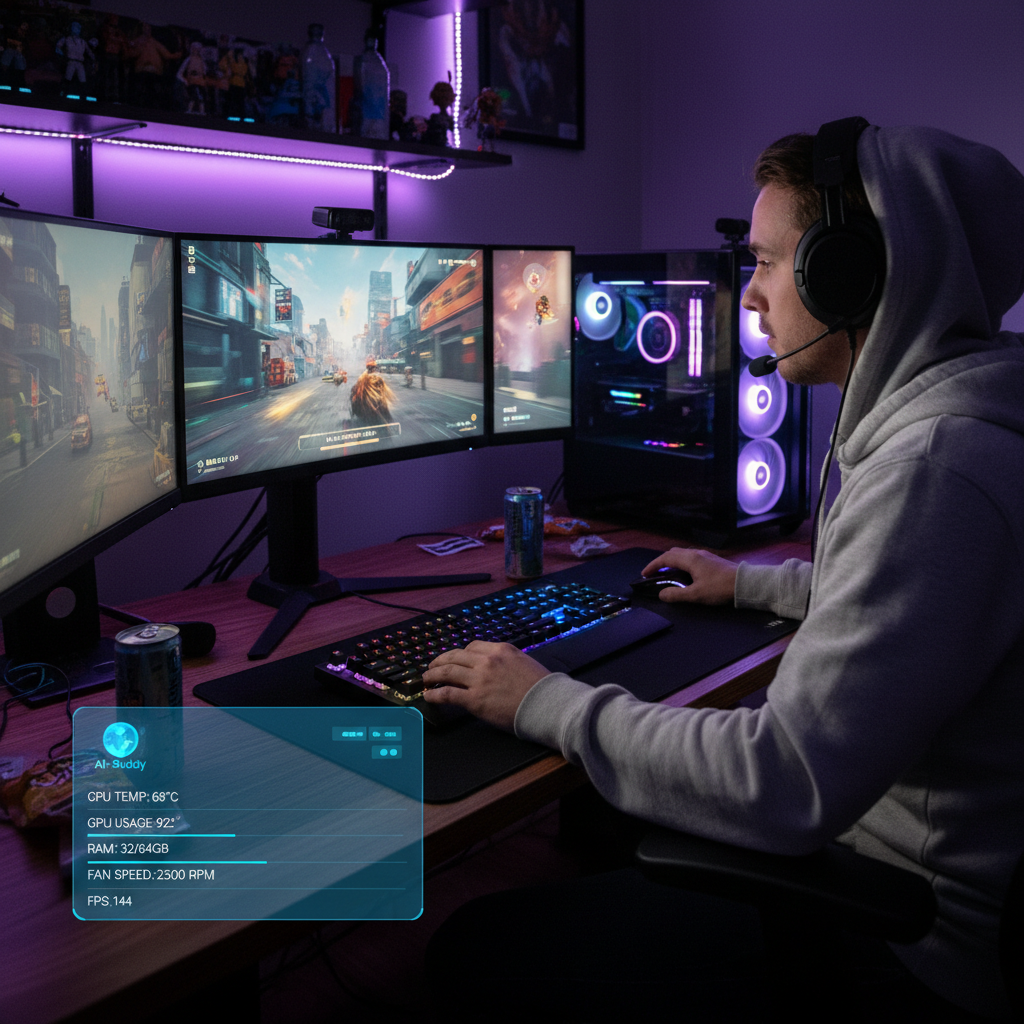
GeForce RTX GPUs primarily deliver immersive gaming experiences for users, but Nvidia has launched its experimental G-Assist AI, which operates locally to improve computer performance and gaming efficiency. Through the Nvidia desktop application, users access this ambitious project, which presents an overlay floating on screen and allows communication with an AI assistant via text or voice commands to track system statistics and adjust settings.
G-Assist presents a collection of captivating capabilities. The system provides detailed responses to general questions like “Explain how DLSS Frame Generation works” that users can ask. The AI demonstrates vital functionality by managing certain system-level configurations. G-Assist lets gamers access real-time system analysis reports, which display data visualizations that update as conditions change. The AI system allows users to modify game-specific parameters and toggle system features on or off. G-Assist enables users who want higher performance to overclock their GPU while also providing performance improvement forecasts.
The public release demonstrates several interesting features but falls short of the advanced integration seen in previous previews. The original design of G-Assist required game awareness to deliver contextual tips for reaching game objectives. At present only a limited number of games feature this level of integration with Ark: Survival Evolved being a prime example.
Bridging the Gap: Peripheral Integration and Performance Trade-offs
Nvidia has expanded its functionality by adding support for third-party plug-ins. G-Assist supports communication with peripherals made by prominent manufacturers, including Logitech G, Corsair, MSI, and Nanoleaf. The system allows users to change an MSI motherboard’s thermal management profile and command Logitech G devices to adjust their LED lighting based on system conditions or video game events.
Nvidia wants to highlight how desktop systems with dedicated GPUs possess built-in AI processing power while the PC market witnesses a rising trend of “AI laptops” introduction. Nvidia introduced the ChatRTX application which serves broader purposes before many AI tools started functioning through cloud-based systems. G-Assist targets gamers who typically have powerful GPU hardware.
Nvidia’s G-Assist program uses a small language model, which they have carefully optimized to run locally. You need 3GB of storage space to install the basic text version, but 6.5GB if you add voice control. G-Assist demands a GeForce RTX 30, 40, or 50 series GPU, which must have at least 12GB of video memory.
G-Assist achieves better performance when running on more powerful GPUs, as they provide accelerated processing speeds. Laptop GPUs will receive support at some point, but their existing performance constraints could reduce G-Assist’s effectiveness.
The choice to execute G-Assist directly on the GPU delivers long-term improvements in privacy and latency but creates substantial hurdles in the near future. The RTX 4070 graphics card experienced increased GPU utilization during tests when users interacted with the AI model.
Generating responses through inference requires significant computational resources, which affect other tasks that run at the same time, especially when playing video games. While playing Baldur’s Gate 3 at maximum settings, users noticed a frame rate drop of about 20% due to G-Assist processing.
Systems that already have difficulty maintaining smooth gameplay might experience further performance degradation due to G-Assist. Except for graphically intensive titles, G-Assist demonstrates significantly better speed performance yet requires a robust GPU for continuous operation.
The experimental status of G-Assist becomes apparent through its sporadic sluggish performance and existing software bugs. The majority of users achieve better performance by manually configuring both system and game settings.
G-Assist serves as a promising beginning to unlock the AI processing potential found in gaming computers. The continuing progress of GPU technology suggests that running demanding games alongside complex AI models at the same time will soon become possible. Nvidia’s G-Assist currently functions as an engaging yet imperfect demonstration of what AI-powered gaming could eventually become. This intriguing experiment proposes a future where your GPU goes beyond creating virtual worlds and starts helping users interact with them.