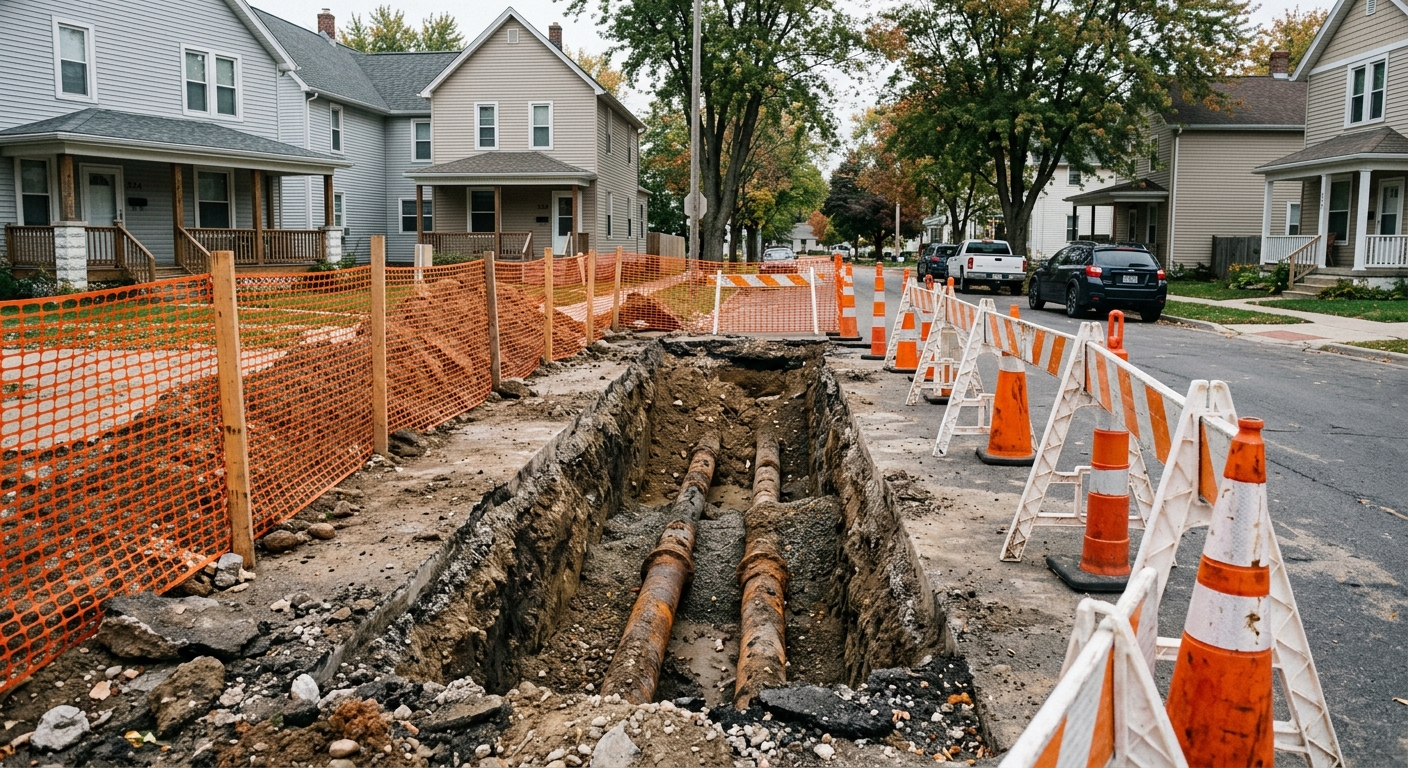
AI-generated illustration; not a photograph of the reported event.
- calendar_today October 9, 2026
Ongoing Water Main Upgrade Leaves Streets with Large Holes
Residents in several Minneapolis neighborhoods have voiced concerns about large holes left unfilled in their streets as the city undertakes a major water main upgrade project. While the extensive infrastructure work aims to improve water quality and flow, many are frustrated by delays in street restoration and the disruptions caused by temporary water lines.
Scope and Purpose of the Water Main Project
The city of Minneapolis is in the process of upgrading more than 17 miles of aging cast iron water main pipes. Most of these pipes, making up almost 70% of Minneapolis' 1,000 miles of water mains, date back as far as 150 years and lack liners, leading to mineral buildup, rust, and potential water quality issues.
The current work involves scraping and lining the interior of these cast iron pipes, usually with cement mortar, to ensure better water flow, improve safety, and maintain adequate pressure for fire hydrants. This project is part of an ongoing effort that has spanned nearly two decades.
Contractors and Construction Timeline
The contract for the $5.7 million upgrade was awarded to Louisiana-based BLD Services, LLC. To perform the necessary repairs, city contractors have had to dig numerous holes to access the water mains. Between late May and early June this year, 280 holes were dug in affected neighborhoods. As of September 30, 93 holes remained open, particularly in the Columbia Park, Prospect Park, and Longfellow/Cooper/Howe neighborhoods.
According to city officials, the remaining holes are expected to be backfilled later this month, with street restoration scheduled for completion by early November. Cleaning and pipe lining have already concluded in Columbia Park west of University Avenue, and final water disinfection and testing are planned before removing temporary systems.
Residents’ Concerns Over Safety and Temporary Water Lines
Some residents, such as Austin Voigt of Columbia Park, say they received little to no prior notice before work began and have now endured several months with large, blocked-off holes in their streets. These holes, reportedly measuring about 10 by 10 feet, are generally surrounded by concrete barriers, but gaps and sagging orange mesh fencing have raised concerns about child and pet safety.
The temporary water lines, which run above ground along curbs and over sidewalks, have also caused problems for residents. During summer, water from these pipes was often warm, emitted unusual odors, and appeared cloudy or “bubbled oddly.” City spokesperson Allen Henry explained that above-ground pipes warm up faster and lose their ability to hold dissolved gasses, creating bubbles and cloudiness, though he assured that the water remains safe to drink. Some neighbors, however, have started using bottled water instead.
Residents have also reported occasional water shutoffs caused by lawnmowers or parked cars disturbing the temporary lines, as well as parking restrictions that persist throughout construction.
Project Challenges and Adjusted Timeline
The Columbia Park neighborhood faced particular delays due to its curved streets and proximity to the northern city limits. Here, more dead-end water mains required the use of epoxy lining in place of cement mortar, which extended the timeline by six weeks due to specialized contractor involvement and additional planning needs.
Despite these challenges, city officials assure residents that the project remains on track for an early November completion. The final steps include disinfecting and testing the water, restoring streets, and removing temporary installations.
Looking Ahead
The water main upgrade forms part of a broader infrastructure upgrade initiative spanning 16 different Minneapolis neighborhoods. Residents are hopeful that, once complete, the project will provide cleaner, safer drinking water and improved service reliability, despite temporary inconveniences. The city remains committed to meeting its completion target and addressing neighborhood concerns along the way.
Source: startribune.com.