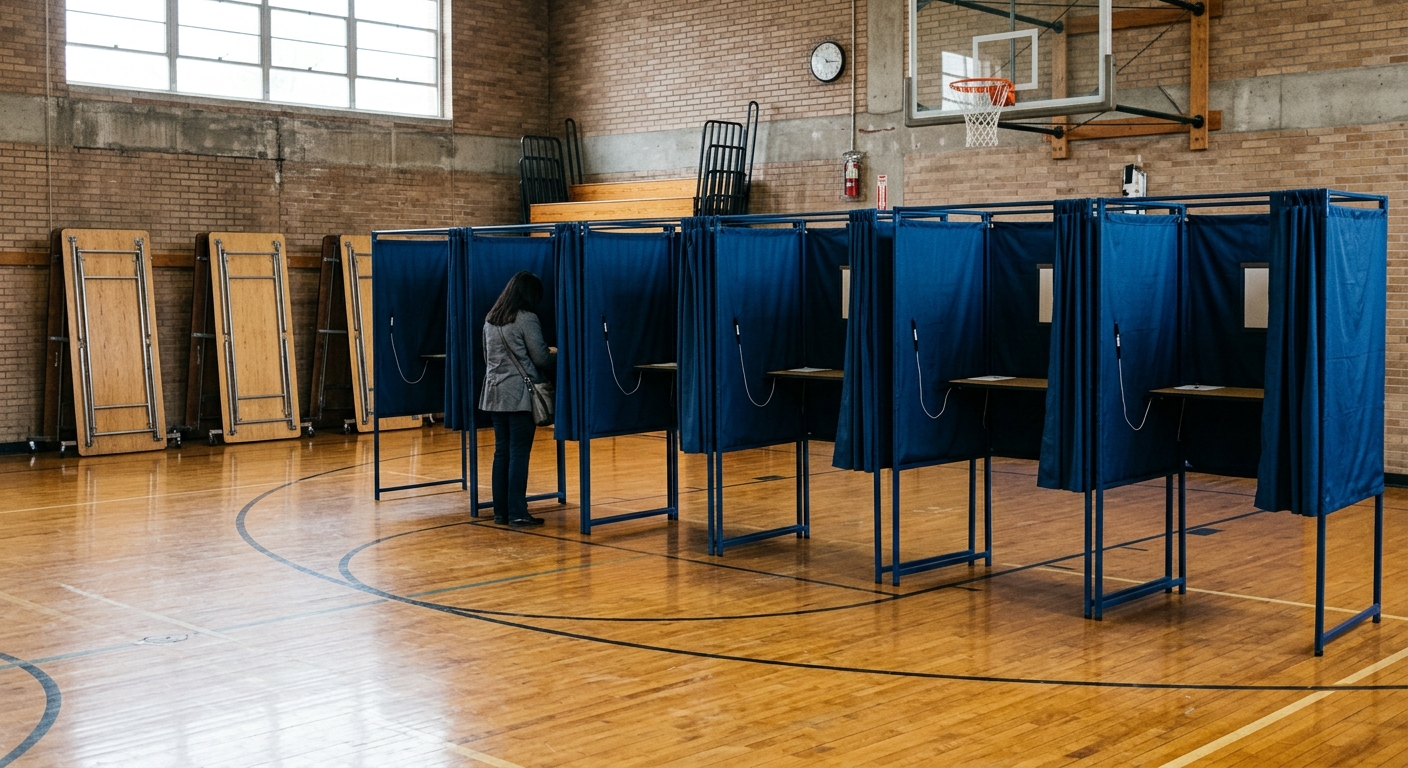
AI-generated illustration; not a photograph of the reported event.
- calendar_today October 12, 2026
National Money Floods Minnesota Campaigns, But Senate Race Left Out
As the U.S. election heats up, national campaign money is hitting Minnesota hard—just not in the expected U.S. Senate race between Peggy Flanagan and Michele Tafoya. Despite competitive polling numbers, major Republican and Democratic groups are focused elsewhere, directing large sums to races in other states and down-ballot contests inside Minnesota.
Senate Race Remains on the Sidelines for National Financial Backers
Minnesota's U.S. Senate contest is closely watched. According to a recent Minnesota Poll, Democratic candidate Peggy Flanagan leads Republican Michele Tafoya 47% to 43%, with 9% of likely voters still undecided. The tight four-point gap keeps Minnesota in play, at least statistically.
Despite this, national Republicans have elected to spend their resources elsewhere. Senate Majority Leader John Thune, who appeared beside Tafoya at a recent farm event in Le Sueur, expressed hope that more attention—and perhaps funds—would come Minnesota's way if Tafoya can build momentum. But so far, the committee has announced $53 million for Iowa, $93 million for Ohio, and $14 million to help an incumbent in Kansas. In contrast, only $62,000 from the National Republican Senatorial Committee has gone directly to Tafoya’s campaign, and Minnesota was left out of a recent $46.5 million national advertising push.
Democratic national groups also largely held off after the primary. Flanagan did benefit earlier from several million dollars from the Democratic Lieutenant Governors Association, but major outside spending slowed after the August nominations.
National Funding Flows Freely Into Other Minnesota Races
While the Senate campaign spending lags, other Minnesota races are seeing a surge. GOPAC, a group backing conservatives nationwide, has funneled millions into Minnesota’s legislative contests. In just one northeast Minnesota state Senate rematch, Republican-aligned groups supported by GOPAC have spent nearly $800,000 against the Democratic candidate.
On the House side, national Democratic group Your Community PAC has invested about $1.5 million in southern Minnesota's First District, mainly targeting Republican Rep. Brad Finstad and supporting Democrat Jake Johnson. A group linked to House Majority Whip Tom Emmer plans to spend another $600,000 for Finstad's defense.
National influence is also visible in local elections: the New York-based Working Families Party has spent over $200,000 supporting Cedrick Frazier in the Hennepin County Attorney race. Meanwhile, $13 million from a Wisconsin billionaire-backed PAC has been sent to Restore Sanity, backing Lisa Demuth for governor.
Public Safety Takes Center Stage in Governor’s Race
The public safety governor race theme has emerged strongly as the election nears. Republican Lisa Demuth released a crime plan after gunfire wounded two teenagers outside Eden Prairie High School. Democrat Amy Klobuchar responded by appearing with law enforcement leaders and unveiling her own strategy. While affordability and fraud have dominated the campaign, both candidates are now focusing on policing, gun safety, and violent crime.
Despite these pushes, the new Minnesota Poll ranks public safety fourth among voter issues, behind affordability, fraud, and health care. Candidates overlap on priorities such as hiring more officers and expanding gang investigations but differ in their approaches to crime penalties and gun policy.
Farmers’ Political Attitudes Show Frustration, But Loyalty Remains
The agricultural sector in Minnesota reflects a complicated political mood. Farmers struggling with tariffs and high fuel prices during Trump’s second term feel frustrated but have not widely abandoned the GOP. As described by Jay Moore, a local board candidate, "Our patience is wearing thin, but we’re going to hang with you. It’s more that mindset than jumping ship." Reporting suggests these farmers' political attitudes may affect turnout, but not necessarily party loyalty.
Key Numbers and Trends in Minnesota Politics
The recent Minnesota Poll reveals identity divides: one-third of Democrats describe themselves as democratic socialists, while 37% of Republicans identify as "MAGA," linked with Trump’s populist movement. Issues of public safety and campaign finance continue to evolve as outside money and national attention shape Minnesota’s political landscape.
Source: startribune.com.